LTO Vehicle Alarm Check 2026: How to Check and Lift an Alarm on Your Vehicle
An LTO vehicle alarm check is the fastest way to find out whether a flag on your vehicle’s record is quietly blocking your next transaction. You show up to renew or transfer, the system stops you, and nobody at the counter can explain why in one sentence — because an alarm is not a single problem. It is a hold placed on a vehicle record for many reasons: an unsettled traffic violation, a carnapping report, a court order, a crash investigation, or an encumbrance. This guide explains what an alarm is, how to check for one through the LTMS portal and at an LTO office, what each common cause means, and how to lift it.
What an LTO alarm is — and what it is not
An LTO alarm is a flag attached to a vehicle record in the LTO system. While it is active, the record cannot move forward through registration renewal or change of ownership. The alarm does not delete your record or cancel your registration on its own. It simply stops the transaction until the underlying problem is resolved and the flag is lifted.
An alarm is different from an expired registration, which can be renewed by paying the renewal fee and any penalties. An alarmed vehicle cannot be renewed at all until the alarm is cleared. It is also different from a plate backlog — a production issue — while an alarm is a legal hold on the record.
Alarms can also sit on a driver’s license record; this guide covers vehicle alarms only.
Common causes of a vehicle alarm
The cause decides which office can lift the alarm and which documents you need:
| Alarm cause | Who places it | What it usually means |
|---|---|---|
| Unsettled traffic violation | LTO, MMDA, or a local government unit | An unsettled ticket or camera apprehension flags the vehicle |
| Carnapping or stolen vehicle report | PNP Highway Patrol Group (PNP-HPG) | The vehicle was reported stolen or carnapped, and the report was sent to the LTO |
| Court order or civil case | A court or quasi-judicial body | The vehicle is in a case, such as a writ of replevin, and the court asked the LTO to flag it |
| Crash or hit-and-run investigation | Investigating police unit and the LTO | The vehicle is part of an ongoing investigation, and the flag stays until the case is cleared |
| Encumbrance (chattel mortgage) | Financing bank or institution | The vehicle is still under a loan or mortgage, recorded as an annotation on the CR |
| Apprehension hold | LTO enforcement or a deputized agency | The vehicle was apprehended and the case is still open |
One distinction: an encumbrance is usually an annotation on your Certificate of Registration, not an alarm in the strict sense. It can still block a transfer until the mortgage is released — but the fix is a release of chattel mortgage from your bank, not an alarm-lifting endorsement.

How to check: the LTMS portal
For the registered owner, the most complete check starts online. An LTO vehicle alarm check through the portal uses the Land Transportation Management System (LTMS), the LTO’s official online system.
- Log in to the LTMS portal with your registered email or LTO client number and password.
- Open the Vehicles section.
- Select the vehicle to open its detailed record.
- Look for a status mark such as “With Alarm”, “Pending Case”, or “For Verification”.
- If a flag appears, note the exact wording and any case or ticket reference shown.
If the vehicle does not appear in your LTMS account, it may not be linked to your client record yet; linking usually requires your Certificate of Registration details.
An online check only answers the records that the portal shows. A flag placed by a police unit or a court may not appear in your LTMS dashboard the same way, which is why an in-person check is still the definitive one.
LTO vehicle alarm check at an LTO office
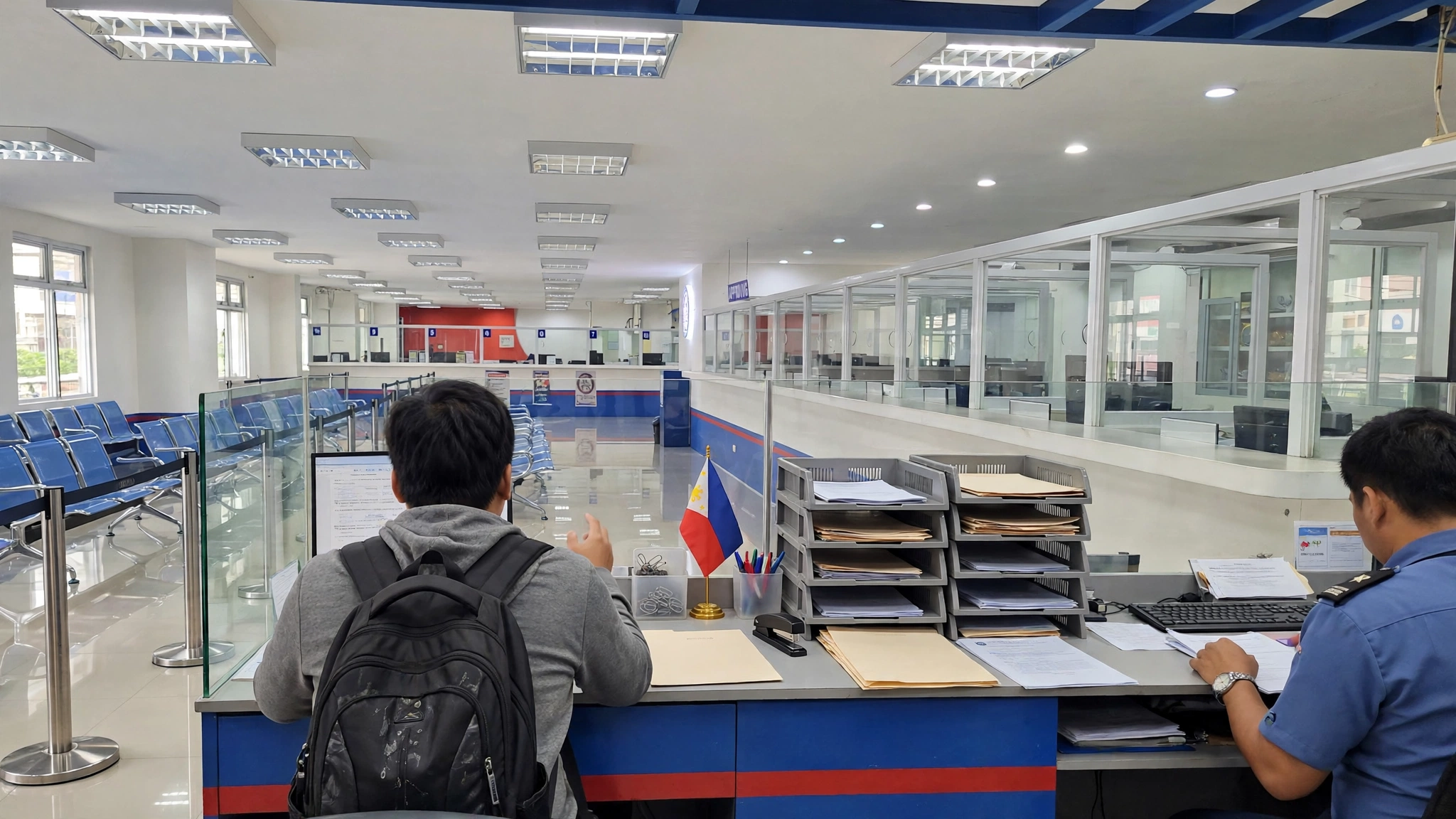
When the portal cannot answer you, go to the LTO office that holds the vehicle’s registration record. Tell the staff which transaction you plan to do — renewal, transfer, or a follow-up on a known case — and ask whether an active alarm affects it.
Bring these with you:
| What to bring | Why they ask for it |
|---|---|
| Original Official Receipt (OR) and Certificate of Registration (CR) | To identify the vehicle record |
| Valid government-issued ID | To prove you are the owner or an authorized representative |
| Plate number and MV file number | To trace the vehicle if the OR/CR is unavailable |
| Authorization letter and ID copies | If checking on behalf of the registered owner |
| Deed of sale and seller’s IDs | If you are a prospective buyer of a second-hand vehicle |
Before you leave the counter, ask for the reason recorded against the vehicle, the office or agency that placed the alarm, and the document or action needed to lift it. That turns a vague “may alarm po” into a fixable problem.
A note on the old SMS service: guides still describe texting “LTO VEHICLE [plate number]” to 2600, at about ₱2.50 per message. An LTO-NCR advisory in October 2026 said the 2600 SMS verification is disconnected from the new LTMS system, so its replies may not reflect current records. Treat any SMS result as a rough screen only.
How to lift an LTO alarm, step by step
There is no single “lift alarm” button. The process follows the cause, and it always starts with the office or agency that placed the flag:
- Confirm the cause and the placing agency. Ask the LTO office which agency placed the alarm and get the case or ticket reference in writing if possible.
- Go to the agency that owns the case: a traffic-violation alarm goes back to the agency that issued the ticket, a carnapping alarm to PNP-HPG, and a court alarm to the court that issued the order.
- Resolve the underlying matter: settle the ticket, obtain the police endorsement, or secure the court order that lifts the flag. Keep every official receipt and document.
- Get the clearance document from the handling office — usually an endorsement, a lifting order, a favorable resolution, or a clearance certificate.
- Submit the clearance to the LTO office that holds the record. Some endorsements are forwarded directly; others you must submit yourself.
- Ask the LTO to confirm the alarm is lifted in the record before you retry your transaction. Do not return to renew or transfer the moment you hold a clearance letter; wait for confirmation that the flag is gone.
- Keep every document. If the system still shows the alarm on your next visit, the receipt, endorsement, or order lets the office trace the update.
Where to go for each type of alarm
| Alarm type | Where to start | What to prepare |
|---|---|---|
| Traffic violation | The LTO, MMDA, or local government unit that issued the ticket | The ticket reference and your official payment receipt, or the favorable resolution if you contested it successfully |
| Recovered stolen or carnapped vehicle | PNP-HPG and the LTO Intelligence and Investigation Division | Original or certified true copy of the OR/CR, plus the PNP-HPG endorsement, recovery and disposition report, macro-etching report, MV clearance, and motor vehicle inspection report |
| Crash or hit-and-run investigation | The investigating police unit and the LTO Intelligence and Investigation Division | The case reference; ask the investigator which endorsement or case documents apply |
| Court or civil case | The court or body handling the case | The original lifting order and a certified true copy of the resolution or decision |
| Encumbrance or chattel mortgage | Your financing bank or institution | A release of chattel mortgage, then have the annotation cancelled on the CR at the LTO |
For a recovered stolen or carnapped vehicle, the documentary list comes from LTO Memorandum Circular No. 673-2006, on the encoding and lifting of alarms for carnapped and recovered motor vehicles. The circular requires the PNP to transmit the alarm request to the LTO within 24 hours of the reported incident. Because the circular dates from 2006, confirm the current checklist with PNP-HPG and the LTO Intelligence and Investigation Division.
Fees and processing time
There is no single published fee for lifting an LTO alarm, because the cost depends on the cause. A traffic-violation alarm costs the fine and penalties; a court-case alarm may involve court fees and document costs; a carnapping case involves the cost of the clearances and inspection reports. The lifting transaction itself is separate from the fine and from the cost of supporting documents, so ask the handling office for the charges that apply to your case.
Processing time also depends on the alarm type and on complete documents reaching the handling office. A settled traffic violation can clear faster than a court case or a carnapping recovery, which must pass through more than one agency. Ask for the processing time for your case, and when to come back to confirm the record has been updated. If an office gives you a reference number, write it down.
Be wary of anyone offering to lift an alarm for a fee outside the official process. The LTO does not lift alarms through fixers, and no real LTO officer will ask you to send money to a personal account. Pay only at an official cashier against an official receipt.
What happens if you try to renew or transfer with an alarm
If you try to renew the registration of an alarmed vehicle, the transaction stops. Under the LTO’s connectivity rules, an active alarm tied to an unsettled violation can block renewal and other transactions until the violation is resolved. The same applies to a change of ownership: the transfer cannot proceed while the flag is active.
That is why an LTO vehicle alarm check matters before money changes hands. If you are buying a used vehicle, ask the registered owner to help verify the record before you pay. Compare the engine and chassis numbers on the vehicle with the CR, and walk into the LTO check together if you can. If the seller refuses a verification, treat that as a serious warning sign. For the transfer itself, the process is covered in the LTO change of vehicle ownership guide.
A traffic-violation alarm also connects to the demerit system: repeated violations add points against the driver’s license, as the LTO demerit points system explains. Settle violations promptly — the LTO traffic fine payment guide walks through the payment options — because an unpaid ticket is the most common reason a routine renewal suddenly stops.
If you only need to confirm a vehicle’s plate or registration details, the LTO tracker on this site covers plate tracking and MV-file-number lookup.
Before you buy a used vehicle: check first
An alarm check is one of the cheapest protections in a used-vehicle purchase. A vehicle can look clean — fresh paint, complete papers, a confident seller — and still carry a flag from a violation, a court case, or a carnapping report filed years ago. The flag only surfaces when you try to register or transfer it, usually after you have already paid.
Do the check before you pay, not after. Ask the seller to come with you to the LTO office, or to provide the OR/CR and authorization. If the record shows an alarm, pause the payment until the registered owner resolves it; a seller’s promise that “it is already cleared” is not proof. Ask for the receipt, endorsement, or order that lifted it, and verify the record with the LTO yourself.
Frequently asked questions
How do I check if my vehicle has an LTO alarm?
An LTO vehicle alarm check starts with your LTMS portal account, under the Vehicles section, or at the LTO office that holds the vehicle’s registration record. Have your OR and CR ready, plus your plate number and MV file number.
Can I check an LTO alarm online using only my plate number?
Not fully. The LTMS portal shows the records of vehicles linked to your own account. There is no official public portal where anyone can type in a plate number and see every alarm, including police and court flags. For a definitive answer, confirm at an LTO office.
Can I renew my registration if my vehicle has an alarm?
No, not while the alarm is active. An alarm tied to an unsettled violation can block registration renewal and other transactions until the underlying matter is resolved and the flag is lifted. Settle the violation or obtain the required clearance first, then confirm the record is clear.
Does paying the traffic fine lift the alarm immediately?
Not necessarily. The issuing agency can lift a traffic alarm after settlement, but the update still has to reach the LTO record. Keep your official receipt and confirm the alarm is lifted before you retry.
How do I clear an alarm on a recovered stolen vehicle?
Start with PNP-HPG and ask for its lifting endorsement. Prepare the original or certified true copy of your OR and CR, and confirm the additional requirements — recovery and disposition report, macro-etching report, MV clearance, and motor vehicle inspection report — with PNP-HPG.
How much does it cost to lift an LTO alarm?
There is no single published fee — the cost depends on the cause: the fine for a traffic violation, court and document costs for a court case, and clearance and inspection costs for a carnapping case. Ask the handling office for the charges that apply to your case.
An LTO vehicle alarm check takes a few minutes online or one visit to an LTO office, and it can save you a blocked renewal, a stalled transfer, or a regretted used-vehicle purchase. Check the record before you transact, find out which agency placed the flag and what it needs to lift it, and do not retry until the LTO confirms the alarm is gone. Keep every receipt, endorsement, and order — the paper trail proves the flag was lifted if the system ever shows it again.