LTO Change of Vehicle Color 2026: Requirements, Fees, and Step-by-Step Process
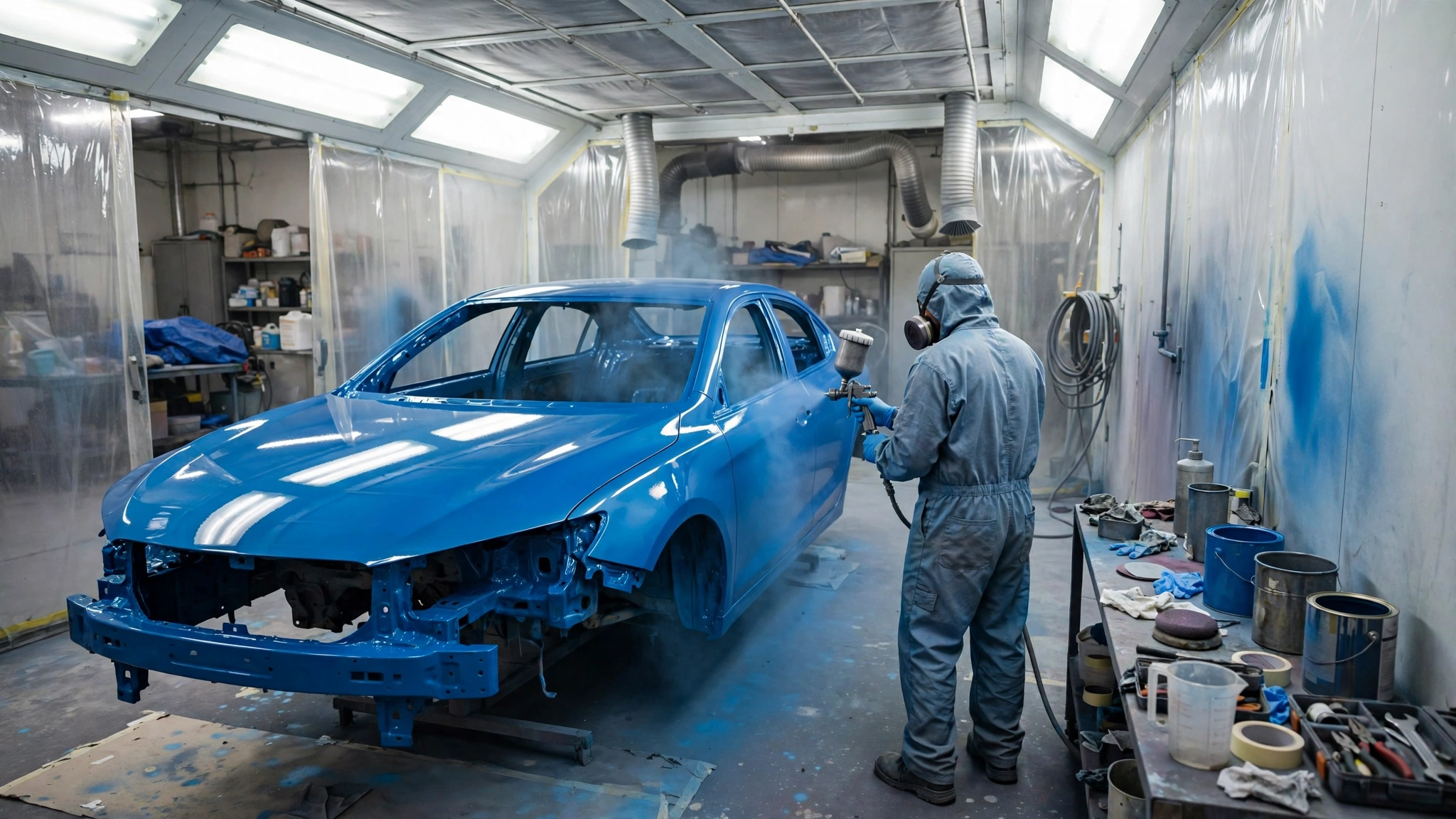
LTO change of vehicle color is the process to understand before you repaint your car a new shade or cover it in a full vinyl wrap, because the colour on your Certificate of Registration (CR) and Official Receipt (OR) must match the colour people can see on the road. Many owners repaint first and discover the paperwork afterwards, when an enforcer at a checkpoint notices the car is blue while the CR still says white.
The short version: if a repaint or a full wrap changes the dominant colour so the vehicle looks significantly different from the colour on your CR and OR, you must process an LTO Change of Color transaction. It updates the original records and gives you an entirely new OR and CR showing the new colour. If the change only shifts to a similar shade, or covers only part of the vehicle, registration is generally not required — but the enforcer at a checkpoint makes that judgement, so read the examples below first.
LTO change of vehicle color: when you must register it
The key test is the dominant colour: the colour covering most of the vehicle, the one a person would name first if asked what colour the car is. You must process an LTO Change of Color transaction if a repaint or a full vinyl wrap completely alters the vehicle’s overall or dominant colour so it is significantly different from the colour and shade on the CR and OR. A white car repainted blue, a silver car wrapped in red, or a yellow car repainted black are clear examples. The test applies whether the new finish is paint or vinyl — what matters is the result on the road, not the method.
This matters because the CR is the vehicle’s identity document. Enforcers, buyers, and the LTO use the colour on the CR, with the make, model, engine number, and chassis number, to confirm that the vehicle in front of them is the vehicle in the records. You cannot update the colour by writing on the old CR, and a paint shop cannot update it for you. Only the LTO can issue the new OR and CR. If you are also transferring the vehicle to a new owner, read the site’s change of vehicle ownership guide as well, because ownership and colour are separate transactions.
When a change of color does NOT need registration
Not every change to how your vehicle looks is a change of colour in the LTO’s sense. If the dominant colour has not changed, registration of the change is generally not required.
| Change | Needs an LTO Change of Color? | Why |
|---|---|---|
| Full repaint to a clearly different colour (white to blue) | Yes | The dominant colour is now significantly different from the CR and OR |
| Full vinyl wrap to a clearly different colour (silver to red) | Yes | The wrap completely alters the overall visible colour, just as paint does |
| Repaint to a similar shade (pale yellow to darker yellow) | Generally no | The dominant colour has not changed, only the shade |
| Decals, logos, or stickers on part of the vehicle | Generally no | Only part of the vehicle is covered; the dominant colour is unchanged |
| Roof, hood, or other accent panels in a different colour | Generally no | The accent covers only part of the vehicle |
| Same-colour repaint after an accident or for a fresh finish | No | The colour on the CR and OR still matches the vehicle |
Read the “generally no” rows with care: they describe the usual position, not a guarantee. Whether a shade change is “similar” or “significantly different” is a matter of judgement, and the enforcer at the checkpoint makes it in the moment. A pale yellow repainted deep gold may look like a different colour to one enforcer and a shade change to another.
Repaint vs vinyl wrap: which one suits you?
A repaint is permanent. Once the old paint is stripped or sanded and the new colour is sprayed on, there is no simple way back. That suits owners who are sure about the new colour and plan to keep the vehicle for a long time. A good repaint, done properly in a spray booth, can look excellent and last for the life of the vehicle, while a poor one can peel, fade, or show the old colour through — so the quality of the shop matters as much as the colour you choose.
A vinyl wrap is reversible. The film is applied over the existing paint and can be removed later to reveal the original paint underneath. That suits owners who want a new look for a few years, want to protect the original paint, or are not yet sure they will keep the new colour. Vinyl wraps typically last 5–8 years, versus permanent paint, according to AutoIndustriya. A full-body repaint is commonly reported at around ₱30,000, while a partial repaint is commonly reported at around ₱5,000 — both older guide figures, so confirm the current price with the shop and get the quote in writing. Neither option changes the LTO process: a full change of dominant colour needs the same PNP-HPG clearance, affidavit, and LTO filing either way.
Requirements checklist for an LTO change of vehicle color
Gather every document before you start, because a missing paper is the most common reason a visit to the PNP-HPG or the LTO ends without progress. Keep the originals together in a folder you can carry to both offices.
| Requirement | Notes |
|---|---|
| Original OR and CR | Current Official Receipt and Certificate of Registration, showing the old colour |
| Original notarized joint Affidavit of Change of Color | Signed by the owner AND the painter; must be notarized |
| PNP-HPG Motor Vehicle Clearance Certificate (MVCC) for change of color | Issued after the PNP-HPG inspection in Step 1 below |
| Macro-etching certificate / stencil of engine and chassis numbers | In the LTO-authorized blue form; taken during the PNP-HPG inspection |
| Duly accomplished and approved Motor Vehicle Inspection Report (MVIR) | Completed and approved as part of the inspection process |
| Valid ID of the registered owner | Bring the original and a photocopy |
| Taxpayer’s Identification Number (TIN) | The registered owner’s TIN |
The joint Affidavit of Change of Color is a sworn statement, signed by both you as the owner and the painter who did the work, and then notarized. Arrange it with the paint or wrap shop while the work is still fresh — do not leave it until weeks later, when the painter may be hard to contact. Notarization is a separate cost, paid to the notary. The macro-etching certificate is the stencil tracing of your engine and chassis numbers, recorded in the LTO-authorized blue form; keep it with the MVCC, as you will need it at both offices. Your valid ID must be the ID of the registered owner named on the CR. If someone else transacts on your behalf, confirm at the office what authorization they need.
Step 1: Get the PNP-HPG clearance (MVCC)
The first formal step is the PNP-Highway Patrol Group Motor Vehicle Clearance Certificate (MVCC) for change of color. You cannot file the Change of Color transaction at the LTO without it. Bring the vehicle to the nearest PNP-HPG office, where a vehicle inspector or Crime Laboratory technician will carry out a physical inspection and take the macro-etching of the engine and chassis numbers.
The clearance fee is ₱300. Pay it at Landbank, or through the Landbank Electronic Payment Portal, using the merchant name “Philippine National Police – Highway Patrol Group” and the transaction type “Transfer of Ownership or Change of Color”. Keep a photocopy of the payment slip: it is your proof of payment. Once the inspection is done and the fee is paid, the PNP-HPG issues the MVCC.
Step 2: File the Change of Color transaction at the LTO
With the MVCC in hand, file the Change of Color transaction at the LTO District Office. Bring the original CR and OR, the PNP-HPG MVCC, the macro-etching report, a valid ID of the registered owner, and the notarized joint Affidavit of Change of Color. At the office, file the transaction, submit the documents for checking, and pay the corresponding LTO fees at the cashier. The cashier’s assessment is the final word on the amount due, so bring enough to cover the fees in the next section and a little extra.
Processing time varies by office workload, so no fixed number of days is stated here. Some offices complete the transaction while you wait; others ask you to return later to collect the new documents. Ask the receiving officer what the expected timeline is at your office, and do not leave without knowing what happens next. If you are unsure which district office handles your vehicle, check the LTO branch directory before you travel: going to the wrong office is a wasted trip.
How much does an LTO change of vehicle color cost?
Fees are the part of this process where the published figures disagree, so this section states the conflict honestly instead of picking one figure and presenting it as settled. The LTO change-of-color fee is commonly listed as ₱100 base in 2026 fee compilations, while older RA 8794 schedules list ₱30. The cashier’s assessment at the counter is final, so the amount you pay is the amount the cashier assesses on the day.
| Fee or cost | Amount | Notes |
|---|---|---|
| LTO change-of-color fee | Commonly listed as ₱100 base in 2026 compilations; older RA 8794 schedules list ₱30 | Cashier’s assessment at the counter is final |
| PNP-HPG Motor Vehicle Clearance Certificate (MVCC) | ₱300 | Paid at Landbank or via the Landbank Electronic Payment Portal |
| Notarization of the Affidavit of Change of Color | Separate cost, paid to the notary | Amount depends on the notary; confirm before you sign |
| Full-body repaint | Commonly reported around ₱30,000 | Older guide figure; confirm the current price with the shop |
| Partial repaint | Commonly reported around ₱5,000 | Older guide figure; confirm the current price with the shop |
The government fees for the transaction itself are small: the LTO fee and the ₱300 PNP-HPG clearance. The large cost, if there is one, is the repaint or wrap itself, plus a small notarization cost. For the wider picture of LTO charges, see the site’s LTO fees schedule.
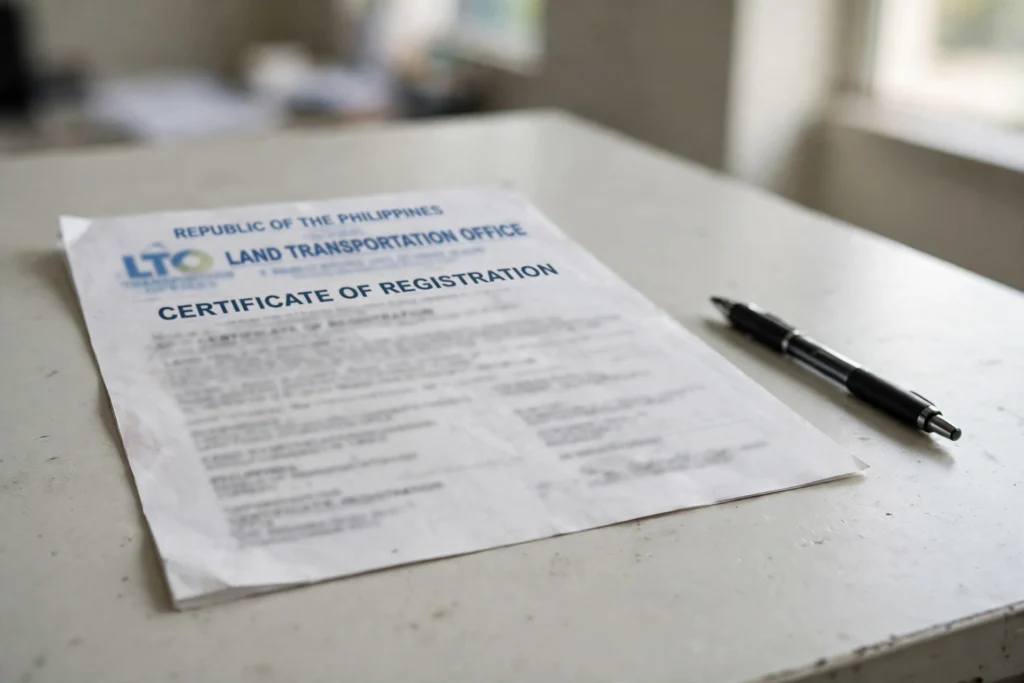
What you receive: your new OR and CR, and what to check on them
A Change of Color transaction updates the original records and creates an entirely new OR and CR showing the new color. You do not keep the old documents with a correction written on them, and you do not receive a sticker or endorsement added to the old CR.
Before you leave the LTO office, check the new documents carefully. Read the colour field first and confirm it states the new colour exactly as you expect it — not the old colour, and not a colour close to the one on the vehicle. Then check the details that should not have changed: the registered owner’s name, the make and model, the engine number, the chassis number, and the plate or MV file number. If any detail is wrong, raise it at the counter at once, while the officer who processed your transaction is still there. Once the new OR and CR are correct, carry the OR in the vehicle as usual.
The risks of driving with a color that does not match your CR
Enforcers — the LTO, the HPG, and the IACT — can flag a mismatch at roadside inspections and at annual registration renewal. At a checkpoint, an enforcer comparing the vehicle with its CR can see the mismatch in seconds. No specific fine amount for an unregistered colour change is confirmed here, so none is stated: do not rely on a figure from a forum or social media post.
Motorcycles and doing the change with your registration renewal
Motorcycles are covered by the same Change of Color transaction as cars and other vehicles. If you repaint or fully wrap your motorcycle in a new dominant colour, the same rule applies: the colour on the CR and OR must match the visible colour, and a full change needs the same PNP-HPG clearance, affidavit, inspection report, and LTO filing. Do not assume a smaller vehicle means a simpler process.
The change can be processed together with a registration renewal where applicable — confirm at the office whether your renewal and your colour change can be handled in the same visit. If your renewal is due soon, read the site’s car registration renewal guide to prepare for that part of the visit, and bring the renewal requirements alongside the colour-change requirements. For the most current official information, check the LTO official website. If anything in this guide and the official website disagree, follow the official website and the officer at your district office.
Frequently asked questions about LTO change of vehicle color
Do I need to register a color change if I only change the shade, for example from pale yellow to darker yellow?
Generally no, if the dominant colour has not changed and the new shade is similar to the one on your CR and OR. The judgement is the enforcer’s at a checkpoint, so if the new shade looks significantly different, treat it as a change that needs registration.
Does a full vinyl wrap count as a color change?
Yes, if the wrap completely alters the vehicle’s overall or dominant colour so it is significantly different from the colour on the CR and OR. A partial wrap, such as a stripe or roof accent, generally does not need registration.
What documents do I need?
The original OR and CR, the original notarized joint Affidavit of Change of Color signed by the owner and the painter, the PNP-HPG Motor Vehicle Clearance Certificate for change of color, the macro-etching certificate or stencil of the engine and chassis numbers in the LTO-authorized blue form, the duly accomplished and approved Motor Vehicle Inspection Report, a valid ID of the registered owner, and the owner’s Taxpayer’s Identification Number.
How much is the PNP-HPG clearance?
₱300, paid at Landbank or through the Landbank Electronic Payment Portal, using the merchant name “Philippine National Police – Highway Patrol Group” and the transaction type “Transfer of Ownership or Change of Color”. Keep a photocopy of the payment slip.
How much is the LTO change-of-color fee?
The published figures conflict: commonly listed as ₱100 base in 2026 fee compilations, while older RA 8794 schedules list ₱30. The cashier’s assessment at the counter is final. Notarization and the repaint or wrap are separate costs.
What do I receive after the transaction?
An entirely new OR and CR showing the new colour. Check the colour field and all other details — owner, make and model, engine and chassis numbers, plate or MV file number — before you leave the office.
Can I do the color change together with my registration renewal?
It can be processed together with a registration renewal where applicable. Confirm at the office whether both can be handled in the same visit, and bring the requirements for both.
What happens if I drive with a color that does not match my CR?
Enforcers — the LTO, the HPG, and the IACT — can flag the mismatch at roadside inspections and at annual registration renewal. No specific fine amount is confirmed in this guide, so confirm any penalty with the LTO or the enforcing agency.
An LTO change of vehicle color is a small transaction with a clear purpose: to make sure the vehicle on the road and the vehicle on paper are the same vehicle. If your repaint or full wrap changes the dominant colour, gather the requirements, get the PNP-HPG clearance first, file the transaction at your LTO district office, pay the assessed fees, and check your new OR and CR before you leave. Done in that order, the process is straightforward — and your papers will match the car you are actually driving.