LTO Practical Driving Course 2026: The 8-Hour PDC Guide Before Your Non-Pro License
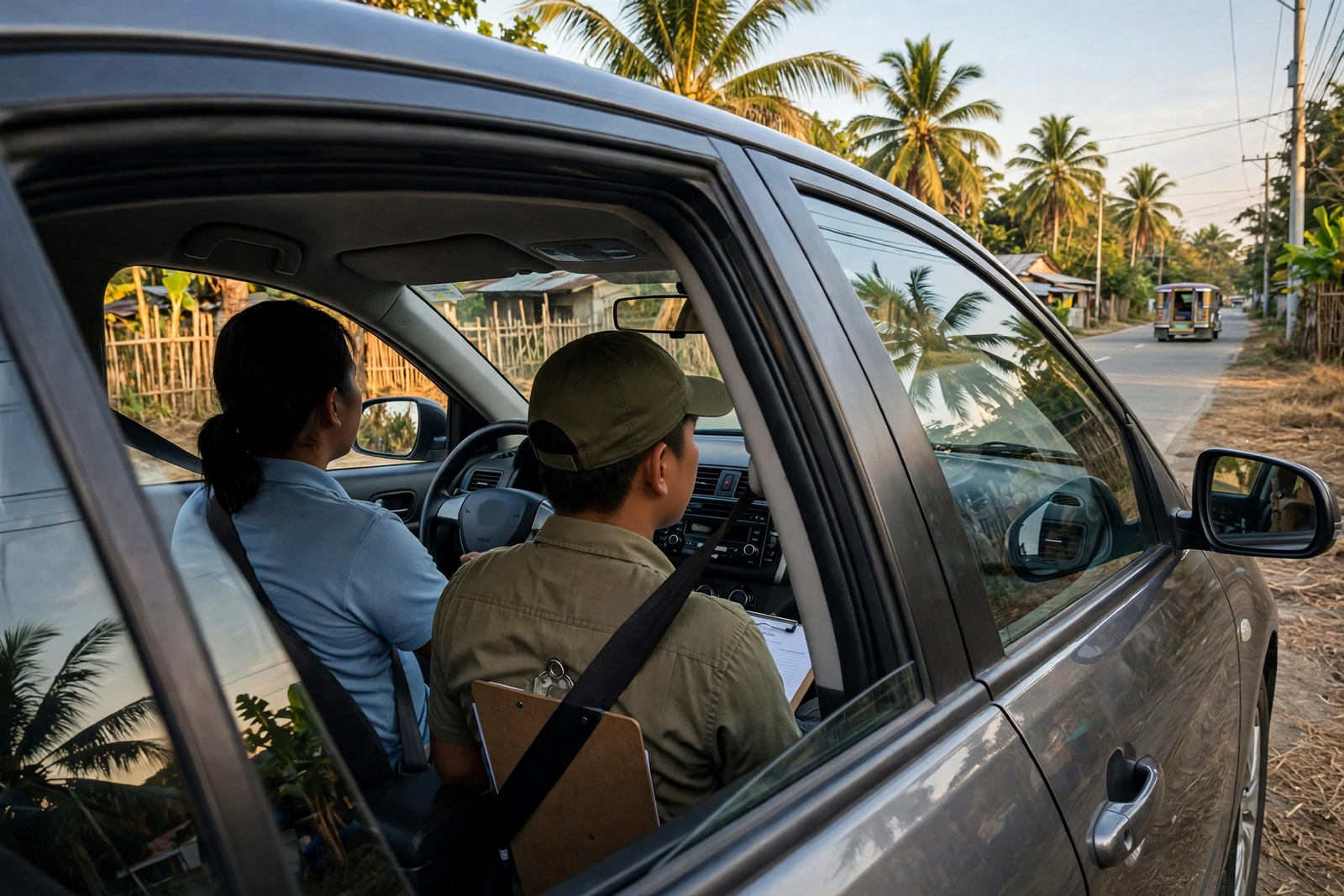
The LTO practical driving course is the 8-hour, hands-on driving course every first-time driver in the Philippines must complete before applying for a non-professional driver’s license. Known as the PDC, it is where you finally get behind the wheel: you learn to start, steer, park, reverse, and drive in real traffic with a licensed instructor beside you. Pass the final assessment and you receive a PDC certificate, sent to the LTO electronically by your school.
The short version: get your student permit first, then enroll in the 8-hour PDC for the vehicle type you want to drive, complete the sessions over at least two days for cars, and pass the final assessment. The LTO caps the fee at ₱2,500 for motorcycles and ₱4,000 for light vehicles, and the course is free at LTO Driver’s Education Centers. Once your certificate is in the LTO system and your permit has been held for at least one month, apply for your non-pro license through the LTMS Portal.
What the LTO practical driving course is and who must take it
The PDC is the practical, in-vehicle part of learning to drive. It is the second of two courses the LTO requires before a first non-professional license. The first is the theoretical driving course (TDC), which you take before getting a student permit. The second is the PDC, which you take after you hold a student permit and before you apply for a non-pro license.
During the PDC, you sit in the driver’s seat for at least 8 hours of hands-on driving, usually spread over 2 to 4 days for cars, or 1 to 2 days for motorcycles. Your instructor teaches you how to control the vehicle, read the road, and respond to traffic — the skills the practical exam tests. The course ends with a practical assessment: the instructor checks whether you can drive safely on your own, not whether you can recite rules from a book.
If you already hold a student permit and are applying for your first non-pro license, the PDC is a step you must complete. The LTO checks for your PDC certificate when you file your license application; without it, your application is not accepted. The same applies if you are adding a restriction code for a different vehicle type: each restriction code needs its own PDC certificate, so an extra code means extra training hours.
How the LTO practical driving course differs from the TDC
The TDC and the PDC sound similar, but they test different things. The TDC is a classroom course about rules: road signs, traffic law, road courtesy, and safe driving habits. The PDC is the hands-on course about control: how to start, steer, stop, park, reverse, and drive in real traffic. They are sequential, and you cannot swap them or skip one for the other. Before you enroll in the PDC, read our theoretical driving course guide to confirm you have finished the TDC correctly.
The two courses also differ in where they happen and how they are tested. The TDC can be taken in a classroom or online, while the PDC must be done in a vehicle with an instructor. The table below compares the two courses at a glance.
| TDC (theoretical driving course) | PDC (practical driving course) | |
|---|---|---|
| When you take it | Before your student permit | After your student permit, before your non-pro license |
| Duration | 15 hours of classroom sessions | At least 8 hours of hands-on driving per DL code |
| Where | Classroom, or online through an accredited provider | In a vehicle, on the road or in a driving area |
| Final test | Written exam, at least 80 percent to pass | Practical driving assessment, pass or fail |
| Fee cap | ₱1,000 | ₱2,500 (motorcycle) to ₱8,000 (heavy vehicle) |
| Free option | Free at LTO Driver’s Education Centers | Free at LTO Driver’s Education Centers |
Note that the TDC is capped at ₱1,000 while the PDC fee depends on the vehicle type, so the PDC costs more in almost every case. The LTO also requires the PDC to be completed within 2 months of enrollment, so check the school’s schedule before you pay.
Requirements before enrolling in the LTO practical driving course
Your student permit is the first requirement. Enrolling in the PDC without one is not allowed, and a school that takes your money without checking your permit should be reported to the LTO. Your permit also has to be valid on the day you enroll: if it expires before you finish, renew it first or start the process again.
Bring your student permit, a valid government ID, and proof of your medical exam result when you enroll. The school needs the permit number to register you in the LTMS system, and the ID confirms you are the person on the permit. The medical result is required for the student permit itself, so it should already be on file, but bring a copy anyway in case the school asks for it.
If you are applying for a non-pro license, read our student permit requirements guide to confirm you have all the documents before your enrollment date. The guide covers which IDs are accepted and what to do if your permit was lost or damaged.
There is no minimum number of classroom hours for the PDC, and no upper age limit. The only timing rule is that your student permit must have been held for at least 1 month before you can apply for a non-pro license. This is a separate rule from the PDC itself, and it is easy to forget: if you enroll in the PDC the same week you get your permit, plan your license application a month later.
What the 8 hours of the LTO practical driving course cover
The 8 hours are driving time, not classroom time. The sessions are spread over 2 to 4 days for cars, and 1 to 2 days for motorcycles, so you practice in real traffic conditions instead of rushing through it in a single day. If a school promises to finish the course in one day for a car, ask the school to confirm that the schedule meets the LTO’s 2-day minimum.
A standard course covers these skills:
- Pre-driving checks. Check the tires, lights, mirrors, and seat position before starting the engine, and confirm the handbrake is released.
- Starting and stopping. Start the engine, release the handbrake, and stop smoothly without stalling the vehicle.
- Steering and turning. Steer through turns, use the correct lane position, and check blind spots before changing direction.
- Parking and reversing. Park in a marked space, reverse into a bay, and perform a three-point turn without hitting the markers.
- Driving in traffic. Follow the flow of traffic, use your signals, and maintain a safe following distance.
- Defensive driving. Scan the road ahead, anticipate hazards, and slow down before intersections and pedestrian crossings.
Instructors usually give a 15- to 30-minute briefing before each session, then let you drive for the rest of the time. Ask for feedback at the end of each session, so you know which skills to practice next time. The instructor’s sign-off at the end of the course is what matters: if the instructor is not satisfied with your driving, you may need extra sessions before the school issues your PDC certificate.
Where to take the LTO practical driving course: free LTO centers vs accredited schools
If cost is your main concern, the free option is the LTO Driver’s Education Centers (DECs). DECs are run by the LTO itself, and the PDC is free there, including the certificate. The catch is availability: DECs have limited slots, and you may need to wait weeks for an opening. There are DECs in Quezon City, Cebu, Davao, and other major cities, so check the LTO’s website for the nearest center.
If you prefer to choose your schedule, enroll in an LTO-accredited driving school. These are private schools that have been inspected and approved by the LTO. Their fees are capped: ₱2,500 for motorcycles, ₱4,000 for light vehicles, and ₱8,000 for heavy vehicles. Check the accreditation certificate in the school’s office before you pay, and confirm the school’s name appears on the LTO’s list of accredited schools.
The Technical Education and Skills Development Authority (TESDA) also offers the PDC for free in some regions, and its graduates can use their TESDA certificate for a PDC. If you are already enrolled in a TESDA driving course, ask the school whether its certificate is accepted for the PDC requirement.
To verify a school’s accreditation, ask for its LTO accreditation certificate and compare the name and address with the LTO’s list. If the school cannot show its certificate, or if the name does not match the list, do not enroll — you may pay for a course that the LTO will not recognize. The full list of accredited schools is published on the LTO website, and the LTO also publishes the list on its official Facebook page.
What the LTO practical driving course costs
The LTO sets a ceiling on what private driving schools can charge for the PDC. The fee cap depends on the vehicle type, and the school cannot charge more than the cap, even if it calls the extra charge a “miscellaneous fee” or “materials fee”. The cap covers the full course, including the certificate. If a school charges you more, ask for a written breakdown of the fee and report the school to the LTO.
| Vehicle type | DL codes | LTO fee cap (private schools) |
|---|---|---|
| Motorcycle | A, A1 | Up to ₱2,500 |
| Light vehicle (car, SUV, van) | B, B1, B2 | Up to ₱4,000 |
| Heavy vehicle (bus, truck) | C, D, BE, CE | Up to ₱8,000 |
The most common point of confusion is the difference between the PDC fee and the LTO license fee. The PDC fee goes to the driving school, while the license fee goes to the LTO. The non-pro license fee is ₱585 plus a ₱67.50 computer fee, and it is paid at the LTO office when you apply, not at the driving school. The school’s PDC fee does not include the LTO’s license fee, so do not pay the license fee at the school.
In practice, most schools charge between ₱3,900 and ₱4,000 for a car PDC in Metro Manila, and ₱1,500 to ₱3,000 for a motorcycle PDC. Prices in the provinces are usually lower, and some schools offer a discount if you enroll with a friend or take the TDC and the PDC together. If you are comparing prices, ask each school for a written quote that includes the certificate fee, so you can compare like with like.
Schools that charge over the cap are breaking the rules. If a school asks you to pay more than the cap, ask for a written breakdown of the fee and report the school to the LTO. The LTO can cancel a school’s accreditation if it overcharges. For a full list of LTO charges, see our LTO fees schedule 2026.
How to complete the LTO practical driving course step by step
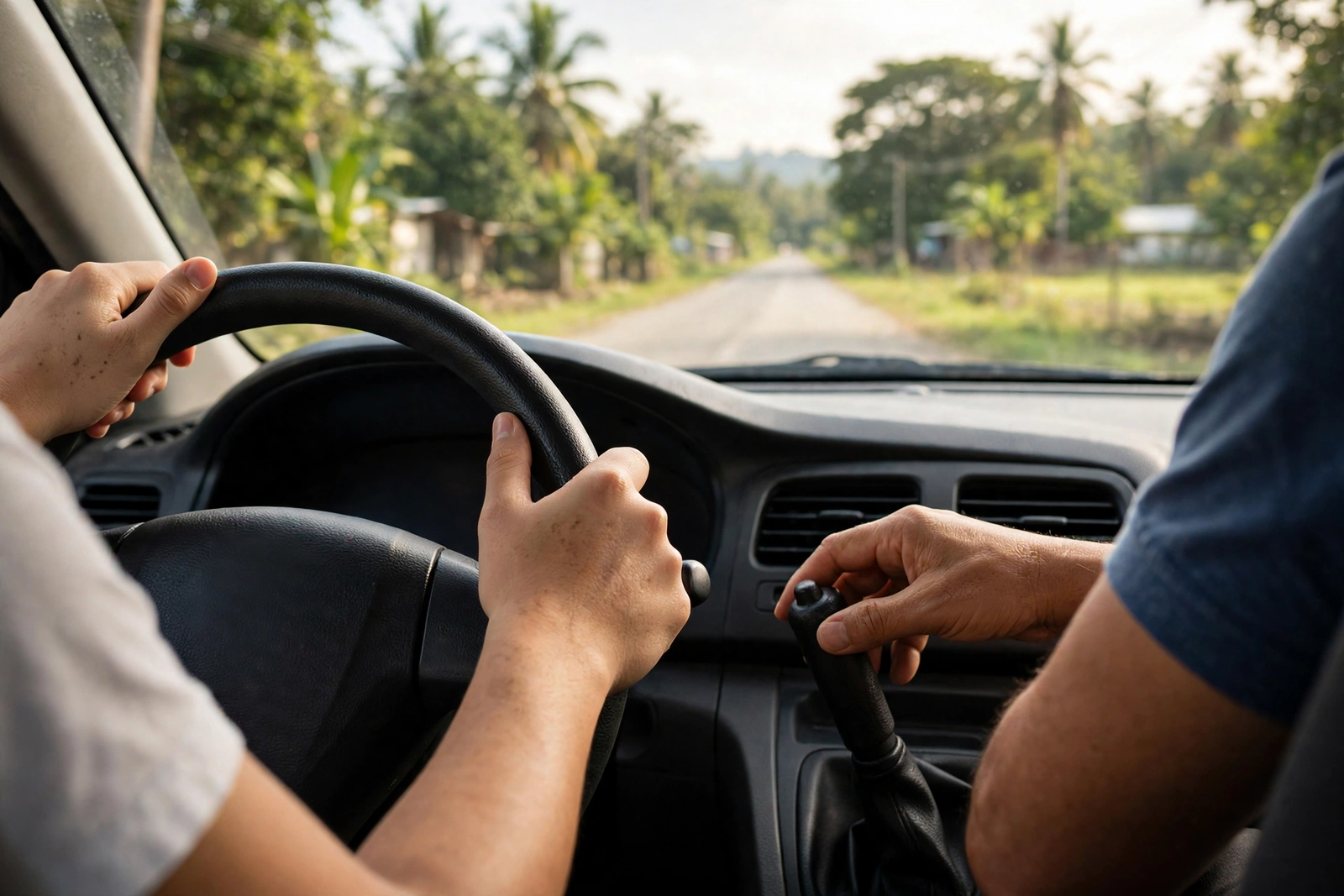
The process takes about a week from enrollment to certificate, and the steps are the same for cars and motorcycles.
| Step | What to do | |
|---|---|---|
| 1 | Enroll in an LTO-accredited driving school or an LTO DEC | Bring your student permit and a valid ID; choose the vehicle type and restriction code |
| 2 | Complete the 8-hour PDC | Drive for at least 8 hours over 2 to 4 days (cars) or 1 to 2 days (motorcycles) |
| 3 | Pass the final assessment | Your instructor checks your driving on the road or in a driving area; ask for feedback |
| 4 | Receive your PDC certificate | Your school sends the certificate to the LTO electronically; ask for a copy |
| 5 | Wait for the 1-month rule | Hold your student permit for at least 1 month before applying for a non-pro license |
| 6 | Apply for a non-pro license | Apply through the LTMS portal or at an LTO office; bring your student permit and PDC certificate |
| 7 | Take the written exam | Pass the written exam at the LTO office; the passing score is at least 80 percent |
| 8 | Take the practical driving test | Drive a test vehicle on a set route; the examiner checks your driving skills |
The non-pro license application itself involves a written exam and a practical driving test at the LTO office, which are separate from the PDC. Read our non-pro license requirements guide to prepare for the application, and remember that you need a student permit held for at least 1 month before you can apply.
Common mistakes and tips for the LTO practical driving course
The mistakes below are the ones that cost students the most time and money.
- Enrolling before getting your student permit. The PDC requires a student permit, and a school that enrolls you without one is breaking the rules.
- Choosing the wrong restriction code. If you plan to drive both a motorcycle and a car, take a PDC for each restriction code, or take a combined course if the school offers it.
- Driving with a fake certificate. The LTO checks PDC certificates electronically, so a fake certificate is easy to detect and can lead to a suspension.
- Enrolling in a non-accredited school. If the school is not accredited, the LTO will not recognize your certificate, and you will have to take the course again.
- Not checking the fee cap. If a school charges more than the cap, ask for a written breakdown and report the school to the LTO.
- Skipping the final assessment. The final assessment is the only way to get your PDC certificate, so do not skip it, even if you feel ready to drive.
If you are unsure about the process, call the LTO’s hotline at 1-342-5863 or visit your nearest LTO office. It is better to ask before you pay than to discover a problem after the course.
Frequently asked questions about the LTO practical driving course
Can I take the LTO practical driving course for free?
Yes. The LTO Driver’s Education Centers (DECs) offer the PDC for free, including the certificate. The course is also free through TESDA in some regions. The only catch is availability: DECs have limited slots, and you may need to wait for an opening.
How many hours is the LTO practical driving course?
The PDC is 8 hours of hands-on driving time, usually spread over 2 to 4 days for cars, and 1 to 2 days for motorcycles. The LTO requires a minimum of 2 days for cars, so a school that promises to finish the course in one day is not following the rules.
What is the LTO fee cap for the PDC?
The fee cap is ₱2,500 for motorcycles, ₱4,000 for light vehicles (cars, SUVs, and vans), and ₱8,000 for heavy vehicles (buses and trucks). The cap covers the full course, including the certificate. If a school charges more, ask for a written breakdown and report the school to the LTO.
Do I need a student permit before I take the PDC?
Yes. The PDC is only open to student permit holders, and the school must check your permit before enrollment. If you do not have a student permit yet, get one first. Read our student permit requirements guide to see what you need.
What happens if I fail the PDC assessment?
You can retake the assessment at the same school, but you may need extra sessions first. The instructor will tell you which skills to practice before the retake. The school should not charge you the full course fee for a retake — only the cost of the extra sessions.
Can I transfer my PDC certificate to another driving school?
No. The PDC certificate is tied to the school that issued it, and it cannot be transferred to another school. If you change schools, you need to take the full PDC again at the new school.
The LTO practical driving course is the step that turns a student permit into a non-pro license. Take the course seriously, choose an accredited school or a free LTO DEC, and make sure your fee is within the cap. With the certificate in the LTO system and your permit held for at least a month, the rest of the license application is straightforward.