LTO New Vehicle Registration 2026: The Complete Guide for Brand-New Cars and Motorcycles
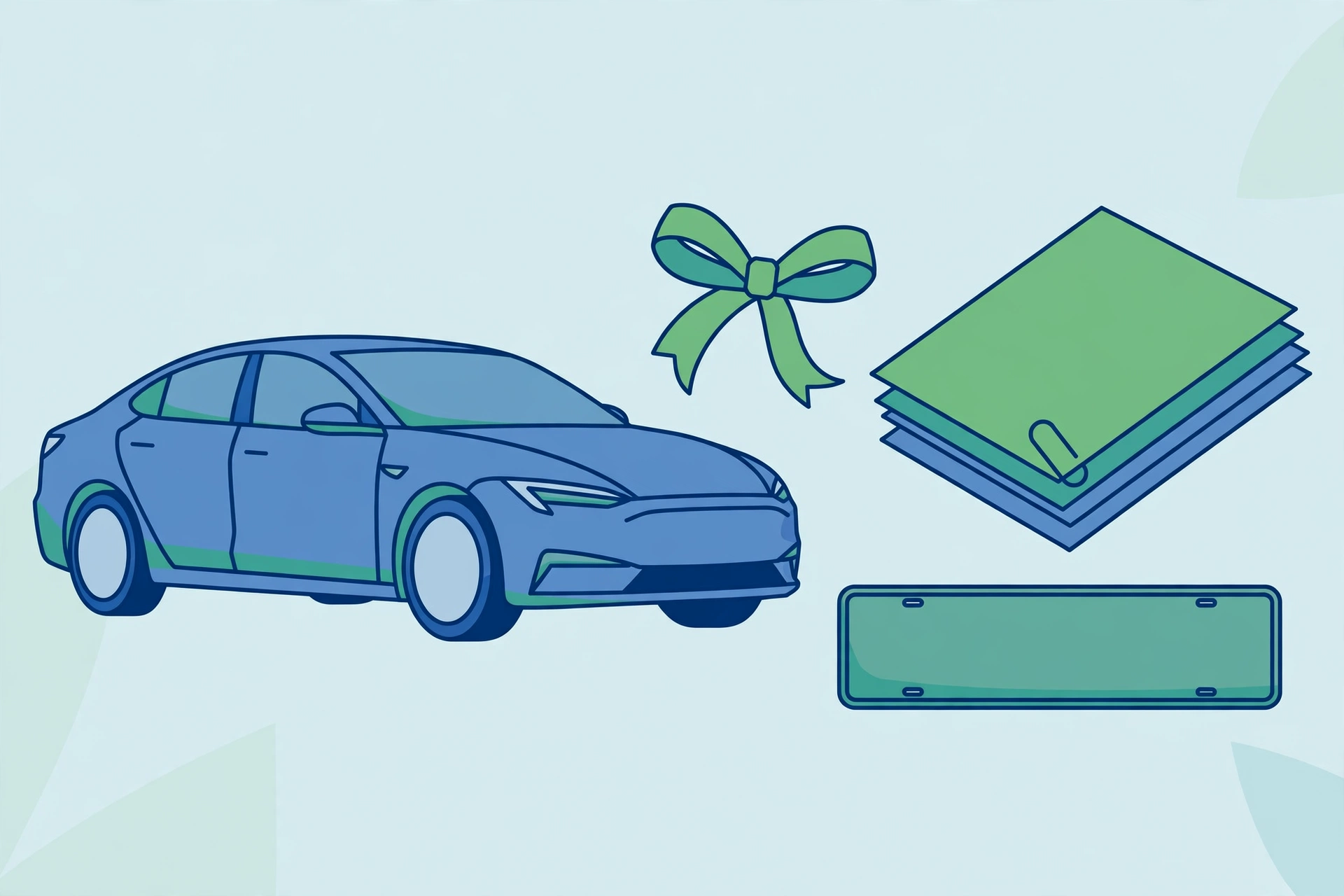
LTO new vehicle registration is the first registration of a brand-new motor vehicle with the Land Transportation Office — the step that turns a dealer’s sale into a road-legal vehicle with its own Official Receipt (OR), Certificate of Registration (CR), and plate number. For most buyers the dealer handles the paperwork, but understanding the process protects you: it tells you what documents should exist, what to check before you drive away, how long the first registration lasts, what it costs, and what to do if the dealer is slow. This guide covers the dealer-handled process, the document checklist, the same-day plate rule, the fee picture, the validity period, and the mistakes that leave new owners driving on a sales invoice alone.
What LTO New Vehicle Registration Is — and Who Handles It
Registration with the LTO is mandatory before any motor vehicle may legally operate on public roads, under Republic Act No. 4136, the Land Transportation and Traffic Code. Initial registration records the vehicle and its owner in the LTO system, collects the Motor Vehicle User’s Charge (MVUC) road tax under Republic Act 8794, and confirms the vehicle carries compulsory third-party liability (CTPL) insurance.
For a brand-new vehicle bought from an authorized dealer, the dealer normally handles the initial registration before or at turnover. About the large majority of new-car buyers never file the papers themselves — the dealer’s liaison submits the sales report and the registration application to the LTO district office. Your job as the buyer is different but equally important: verify that the registration was actually filed, that the OR/CR carries your correct name and the correct engine and chassis numbers, and that you receive the plate or a lawful plate-release arrangement before accepting the vehicle.
A small number of buyers handle initial registration themselves — for example, buyers of vehicles from non-dealer sources, or owners of imported, rebuilt, or tax-exempt units. The document checklist below applies to them directly, and the same LTO district office process is used.
The Document Checklist
Under the LTO’s published checklist for initial registration of ordinary brand-new units, the application includes the following. The dealer assembles most of these; ask to see that each item exists.
| Document | What it is |
|---|---|
| Authenticated sales invoice | The dealer’s official invoice showing the buyer, the price, and the complete vehicle details |
| Certificate of Stock Reported (CSR) | The dealer’s certificate that the vehicle came from legitimate inventory, with its specifications and identification numbers |
| PNP-HPG clearance + Special Bank Receipt | The Philippine National Police Highway Patrol Group clearance confirming the vehicle is not reported stolen, with its payment receipt |
| Electronically transmitted CTPL insurance | Compulsory third-party liability coverage, transmitted electronically to the LTMS system, valid for the initial registration period |
| Certificate of quality control / emission compliance | The manufacturer’s certification that the unit passed smoke emission and roadworthiness tests; for the vehicle model, this is the DENR Certificate of Conformity |
| Motor Vehicle Inspection Report (MVIR) | The inspection report for identification of the vehicle |
| LTO client or business ID | The owner’s LTO client identification, created through the LTMS portal |
| Affidavit or undertaking on scanned documents | The undertaking concerning the scanned documents submitted with the application |
Special vehicles carry additional requirements: imported, rebuilt, and tax-exempt units need extra clearances beyond this core list, and a motorcycle with a sidecar needs an affidavit of attachment for the sidecar. If your vehicle is financed, check that the CR correctly shows the financing annotation (encumbrance) — an error here causes problems later when the loan is released or the vehicle is sold.
LTO new vehicle registration: Step-by-Step Process
The LTO new vehicle registration process for a dealer-handled purchase runs as follows:
- The dealer reports the sale. The dealer submits its sales report, the original sales invoice, and the stencils of the engine and chassis numbers to the LTO, and prepares the CSR for the unit.
- Clearances and insurance are secured. The dealer arranges the PNP-HPG clearance and the CTPL insurance, both transmitted or recorded in the LTO system, and completes the inspection report.
- The application is filed at the LTO district office. The full document set is submitted for evaluation, and the MVUC and other fees are assessed.
- Fees are paid and the OR/CR is issued. Payment is made at the authorized cashier or payment facility, and the Official Receipt and Certificate of Registration are generated in the buyer’s name.
- The plate number is assigned and the plate is released. Under the LTO’s same-day registration and plate-release framework, covered brand-new vehicles should be released with their plates, OR, and CR at turnover — see the next section.
- The buyer verifies everything before accepting the vehicle. Check the OR/CR details against the delivered unit (next section), keep copies of every document, and confirm the registration validity printed on the OR/CR.
If you are filing yourself rather than through a dealer, the same steps apply at an LTO district office that handles motor vehicle registration: bring the full document set, present the vehicle for inspection where required, submit at the evaluation window, pay only at the authorized cashier, and obtain the OR and updated registration record. Our LTO branch directory can help you find an office that handles registration transactions.
The Same-Day Plate Rule: What to Demand at Turnover
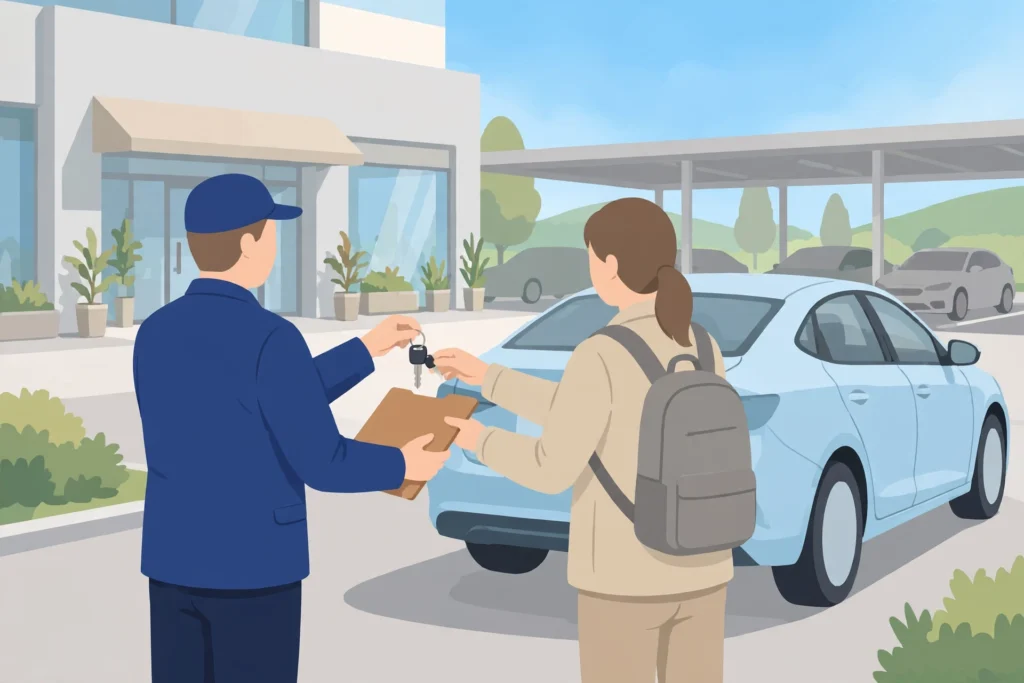
One of the most important recent changes for new buyers is the LTO’s same-day registration and plate-release framework, established by LTO Memorandum Circular No. VDM-2025-4665. Under this framework, participating dealers and LTO offices are to process the registration and release the plate, OR, and CR in connection with the turnover of covered brand-new vehicles — and release of a covered vehicle without the plates, OR, and CR is prohibited.
In practical terms, before you accept delivery, ask the dealer for:
- The Official Receipt, in your name;
- The Certificate of Registration, or an officially recognized temporary CR where one applies;
- The assigned plate, or proof of lawful plate-release status;
- The sales invoice and the insurance certificate;
- The warranty and service documents.
A sales invoice or conduction sticker is not a permanent substitute for valid registration. The conduction sticker identifies the vehicle while its papers are being processed, but it does not authorize indefinite driving of an unregistered vehicle, and a dealer’s verbal assurance that purchase alone creates a grace period should not be relied on. If the dealer cannot produce the plates, OR, and CR at turnover, get the promised release date in writing and follow up in writing as well.
If your dealer delays, preserve the invoice, your payment records, the promised release dates, and all correspondence. These are the records you will need if you escalate to the LTO district office or the dealer network’s customer service.
How Long the First Registration Lasts
Under the long-standing initial registration scheme for brand-new motor vehicles — Administrative Order No. 010-2005 and its implementing rules in LTO Memorandum Circular No. 575-2005 — the initial registration of a brand-new vehicle is valid for three years. The MVUC is collected for a minimum of three years under that scheme, and the year-validity tags issued are valid for three years. The three-year scheme was later extended to brand-new motorcycles with engine displacement of 200cc and below through LTO Memorandum Circular No. JMT-2023-2395.
One caution for 2026 buyers: some current guides report that a five-year initial-registration policy for brand-new vehicles was announced in early 2026. That change is not confirmed here against an official LTO issuance, so this guide does not state it as settled. The safe practice is the same either way — check the validity actually recorded on your OR/CR, because that document, not any guide, states how long your registration runs. After the initial period ends, registration renews annually, with the plate-digit schedule and inspection steps explained in our guide to car registration renewal.
What LTO New Vehicle Registration Costs
The fee stack for a first registration is vehicle-dependent, because the MVUC is charged by vehicle type and weight. The line items most commonly listed are:
| Item | Commonly listed figure |
|---|---|
| First-time registration fee | Around ₱1,000 |
| Motor vehicle plate | ₱450 for a regular plate |
| Computer fee and smaller LTO lines | A few hundred pesos combined |
| MVUC (RA 8794) | By weight and type; the largest single item for a private car |
| CTPL insurance | Commonly reported around ₱610 for a private car, varying by insurer |
For a private sedan, current guides place the total first-time registration roughly between ₱4,000 and ₱7,500 including the MVUC, but that range is a third-party compilation, not an official total — the cashier’s assessed computation is final, and a heavier vehicle pays a larger MVUC. Electric vehicles receive a reported MVUC discount under Republic Act 11697 (30 percent for pure electric vehicles, 15 percent for hybrids); ask the cashier whether the discount has been applied.
Under the three-year scheme’s rules, late initial registration carries a penalty of 50 percent of the basic one-year MVUC fee, reckoned from seven working days after the invoice date — another reason not to let a dealer delay sit unchallenged. For the full fee picture across LTO transactions, see our LTO fees schedule 2026.
After Registration: Inspection, Renewal, and Your Records
Once the initial period ends, annual renewal applies. Vehicles generally need an inspection at a PMVIC (Private Motor Vehicle Inspection Center) or accredited emission testing center when required for their age and class — see our PMVIC inspection guide for the tests, fees, and what to expect. Keep your OR/CR safe: if either document is later lost, damaged, or stolen, the replacement process is covered in our guide to lost license and plate replacement, and a duplicate OR/CR follows its own procedure.
Two record-keeping habits save new owners real trouble:
- Photograph the OR/CR and the plate the day you receive them. If the documents are lost, a clear photo speeds up every later transaction.
- Verify the engine and chassis numbers on the CR against the vehicle itself. A mismatch discovered at renewal or sale time is far harder to fix than one caught at turnover.
You can also check your vehicle’s record through the official LTMS portal once your LTO client account reflects the registration.
Common Mistakes New Vehicle Owners Make
- Driving indefinitely on the sales invoice or conduction sticker. Neither is a permanent substitute for registration — confirm the plates, OR, and CR exist before treating the vehicle as road-legal.
- Accepting delivery without checking the OR/CR. Wrong name, wrong address, wrong engine or chassis number, or a missing financing annotation all cause trouble later.
- Not getting the plate-release date in writing. Verbal promises are hard to enforce; a written date plus written follow-ups are your leverage.
- Assuming the dealer filed everything. Ask for the OR/CR itself, not an assurance that it was filed.
- Budgeting only the headline fee. The MVUC, insurance, and smaller lines make up most of the bill — budget the full stack.
- Losing the turnover documents. Keep the invoice, insurance certificate, warranty papers, and OR/CR together; replacements cost time and money.
- Missing the renewal after the initial period. The three-year (or as-recorded) initial validity ends, and annual renewal with inspection then applies — diary the expiry from the OR/CR, not from the purchase date alone.
Frequently Asked Questions
Who handles LTO new vehicle registration for a brand-new car?
Normally the dealer. The dealer reports the sale, prepares the CSR, arranges the PNP-HPG clearance and CTPL insurance, files the application at the LTO district office, and hands you the OR/CR and plate at turnover. Your job is to verify the documents and the plate before accepting the vehicle.
What documents are needed for initial registration?
The core set is the authenticated sales invoice, the Certificate of Stock Reported (CSR), the PNP-HPG clearance with its Special Bank Receipt, electronically transmitted CTPL insurance, the manufacturer’s quality-control or emission-compliance certification, the Motor Vehicle Inspection Report (MVIR), the owner’s LTO client ID, and the undertaking on scanned documents. Imported, rebuilt, and tax-exempt units need additional clearances.
How long is the first registration valid?
Under the established three-year initial registration scheme (AO 010-2005 / MC 575-2005), brand-new vehicles are initially registered for three years, and the scheme was extended to brand-new motorcycles of 200cc and below. A five-year policy has been reported in some 2026 guides but is not confirmed here against an official issuance — check the validity actually printed on your OR/CR.
Can I drive a brand-new vehicle with only the sales invoice and conduction sticker?
No, not indefinitely. The conduction sticker identifies the vehicle while papers are processed, but it is not a permanent substitute for registration. Under the LTO’s same-day registration and plate-release framework, covered brand-new vehicles should be released with their plates, OR, and CR at turnover.
How much does first-time registration cost?
For a private sedan, current guides place the total roughly between ₱4,000 and ₱7,500 including the MVUC, but that is a third-party range, not an official total. The stack includes a first-time registration fee of around ₱1,000, a ₱450 plate, smaller LTO lines, weight-based MVUC, and CTPL insurance around ₱610. The cashier’s assessed computation is final.
What should I check before accepting delivery?
That the OR and CR are in your name, that the engine and chassis numbers match the delivered unit, that the registration classification and validity are correct, that any financing annotation is accurate, and that you have the assigned plate or a lawful plate-release arrangement, plus the sales invoice, insurance certificate, and warranty documents.
What happens after the initial registration period ends?
Registration renews annually, with the plate-digit schedule, CTPL insurance, and inspection requirements that apply to renewals. See our guide to car registration renewal for the annual procedure and our PMVIC inspection guide for the inspection step.