LTO Change of Engine 2026: Requirements, Fees, and Step-by-Step Process
An LTO change of engine is the official process of updating your vehicle’s Certificate of Registration (CR) after the original engine has been replaced with a different one. Once a new engine is installed, the motor number on your CR no longer matches the engine in the vehicle — a mismatch that matters at every inspection, registration check, or sale. This guide explains the requirements, documents, PNP-HPG clearance, fees, and step-by-step process in plain words, so you can finish in as few trips as possible.
What an LTO change of engine Is and When You Need One
An engine change means the engine installed in your vehicle is not the one listed on your CR — an old engine can fail beyond repair, a replacement can come from another registered vehicle, or a second-hand engine can be bought after an accident. In all of these cases, the LTO record must be updated so the new motor number becomes the official one.
This is different from repairing your engine: if a mechanic overhauls the original engine or rebuilds the same block, the motor number stays the same and no update is needed. The process applies only when the engine block itself — the part carrying the motor number — has been replaced. It is also different from a change of color or ownership, though those can happen at the same time. If you bought a vehicle whose engine was already replaced, sort out the update together with the transfer; our guide to change of vehicle ownership explains what the transfer requires.
The vehicle must already be registered with the LTO before you can apply — an unregistered vehicle with a replaced engine has two problems at once, so confirm at your branch how to sequence them if your registration is also due.
Is an LTO change of engine Legal? What RA 4136 Says
Yes, replacing an engine is legal, but only when the LTO approves the change and updates the CR. Republic Act No. 4136, the Land Transportation and Traffic Code, prohibits exchanging, effacing, or replacing the original motor number unless the change is satisfactorily explained and approved by the LTO — a rule that stops stolen engines and vehicles from being given a clean identity.
The New Anti-Carnapping Act (Republic Act No. 10883) makes the warning sharper. Never grind, alter, or restamp a motor number yourself, and never let anyone do it for you — a tampered number can make a good engine look stolen and turn a simple update into a criminal problem. If the number on your replacement engine is unclear or damaged, let the LTO and the PNP Highway Patrol Group (HPG) decide how to handle it.
The same applies to the engine’s origin: a replacement engine needs papers showing where it came from, such as the deed of sale or deed of donation if it came from another registered vehicle. If the seller cannot produce papers, walk away — an undocumented engine is the most common reason applications are refused.
In some cases a Certificate of Road Safety from the manufacturer may be required, and an LTO officer may inspect the vehicle to check whether the new engine changes its classification. Confirm at your branch whether that applies to yours.
Documents You Need for an LTO change of engine
Gather every document before you go to the HPG or the LTO — a missing paper is the most common reason for a wasted trip, and the HPG clearance cannot be started without the core documents. Bring originals plus one photocopy of each.
| Document | Notes |
|---|---|
| Original Certificate of Registration (CR) | If encumbered, bring the CR-Encumbered (CRE) plus the financing company’s written conformity |
| Latest Official Receipt (OR) | Shows the vehicle is currently registered |
| PNP-HPG Motor Vehicle Clearance Certificate (MVCC) | Issued after inspection and database check; see the next section |
| Macro-etching report | Etching of the new engine’s motor number, done during the HPG process |
| Motor Vehicle Inspection Report (MVIR) | Duly accomplished; completed during the LTO inspection |
| Joint Affidavit of Change of Engine | Signed by the owner; original copy |
| Deed of sale or deed of donation of the engine | Needed when the engine came from a different vehicle or owner |
| Valid government-issued ID | Bring the original and a photocopy |
| LTO copy or electronically transmitted documents | As required by the office |
If your CR is lost or damaged, sort that out first. Our guide to duplicate OR CR explains how to replace a lost or damaged registration document, and you will need the replacement in hand before the engine update can proceed. If the vehicle is still under financing, contact your financing company early — their conformity letter can take days to issue, and the LTO will not process an encumbered CR without it.
Check every name, plate number, and chassis number before you leave home — one mismatched letter between the CR and your ID can send you back for an affidavit.
PNP-HPG Clearance: The First Step in an LTO change of engine
Before the LTO can update your CR, the PNP-HPG must clear the replacement engine. This step catches stolen engines, so it cannot be skipped and it cannot be rushed.
Bring the vehicle, the original CR, the latest OR, and your valid IDs to an HPG clearance center — Camp Crame in Quezon City is the best-known one, with regional HPG offices offering the same service. The HPG runs the new motor number and the chassis number through the carnapping database to confirm neither is listed as stolen.
The clearance fee is commonly reported at ₱300, paid through a LandBank deposit — never hand cash to an officer for this fee. Macro-etching of the engine number is commonly reported at ₱200, paid on site to the technician. Keep every payment slip; you will need them at the LTO counter.
The MVCC is typically released within 3 to 5 working days. Its validity is commonly reported as 7 working days — confirm at the HPG or LTO office — so do not get the clearance weeks before your LTO visit. Go to the LTO promptly while it is still valid; an expired clearance means starting the HPG step again.
Have the engine bay cleaned before the HPG inspection: a motor number covered in oil and dirt cannot be etched clearly, and a failed etching means a return visit.
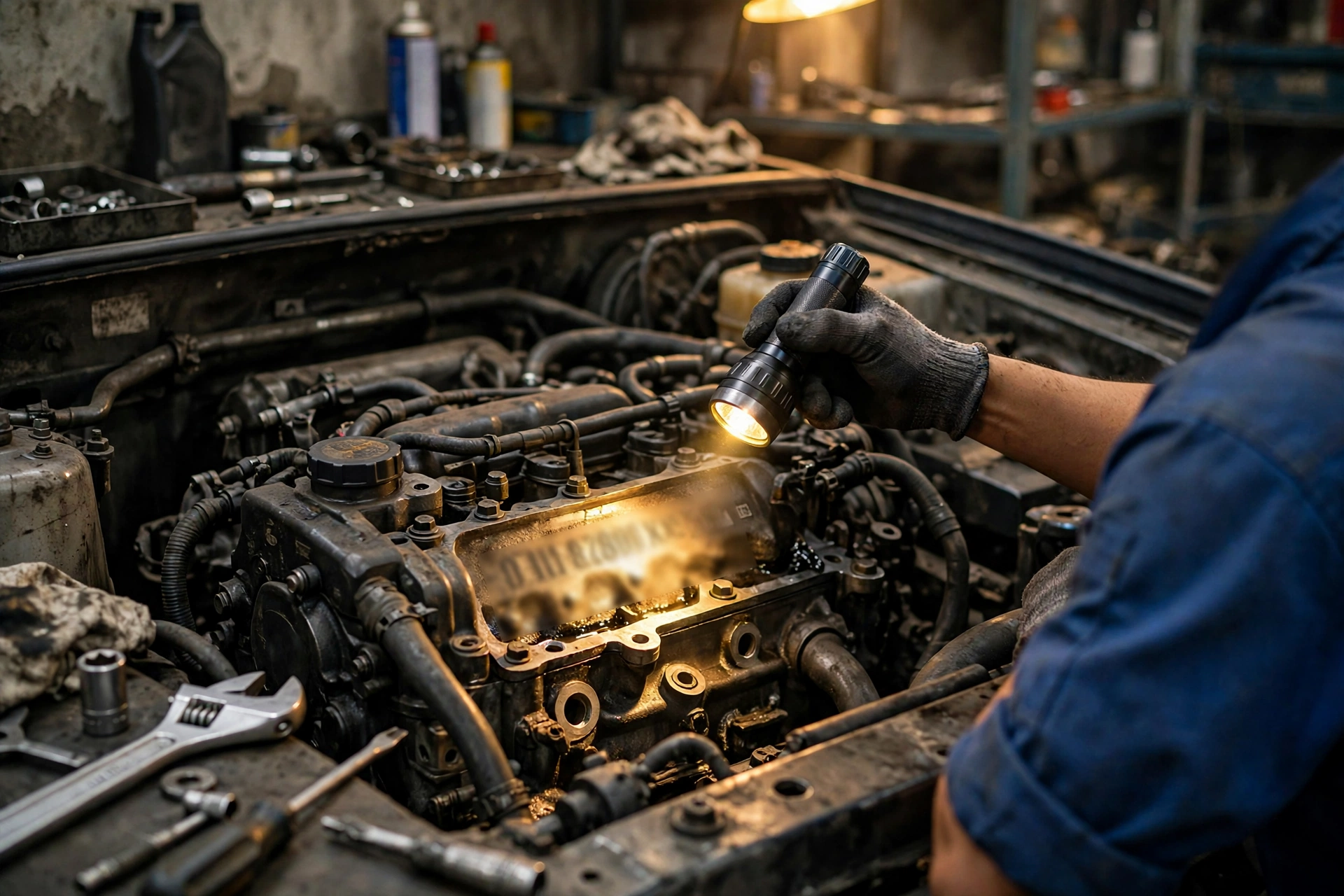
Step-by-Step: How to Complete Your LTO change of engine at the LTO
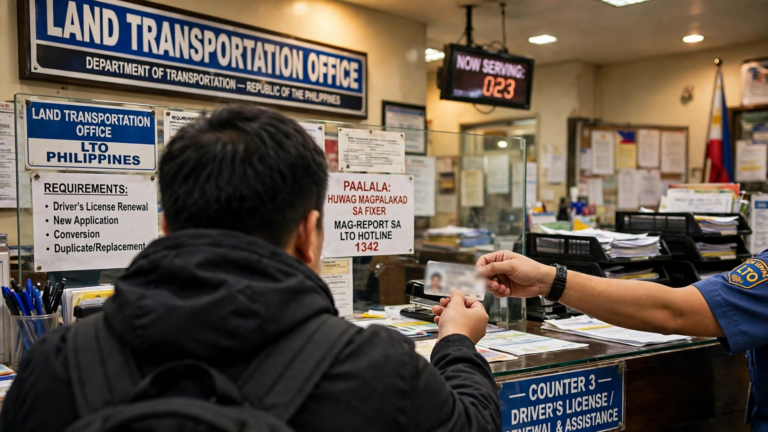
With the HPG clearance in hand, the LTO part is straightforward. Expect most of the day at the office, and arrive early — queues are longest after lunch.
- Go to the nearest LTO office that handles registration transactions and get a queue number for a change-of-engine transaction.
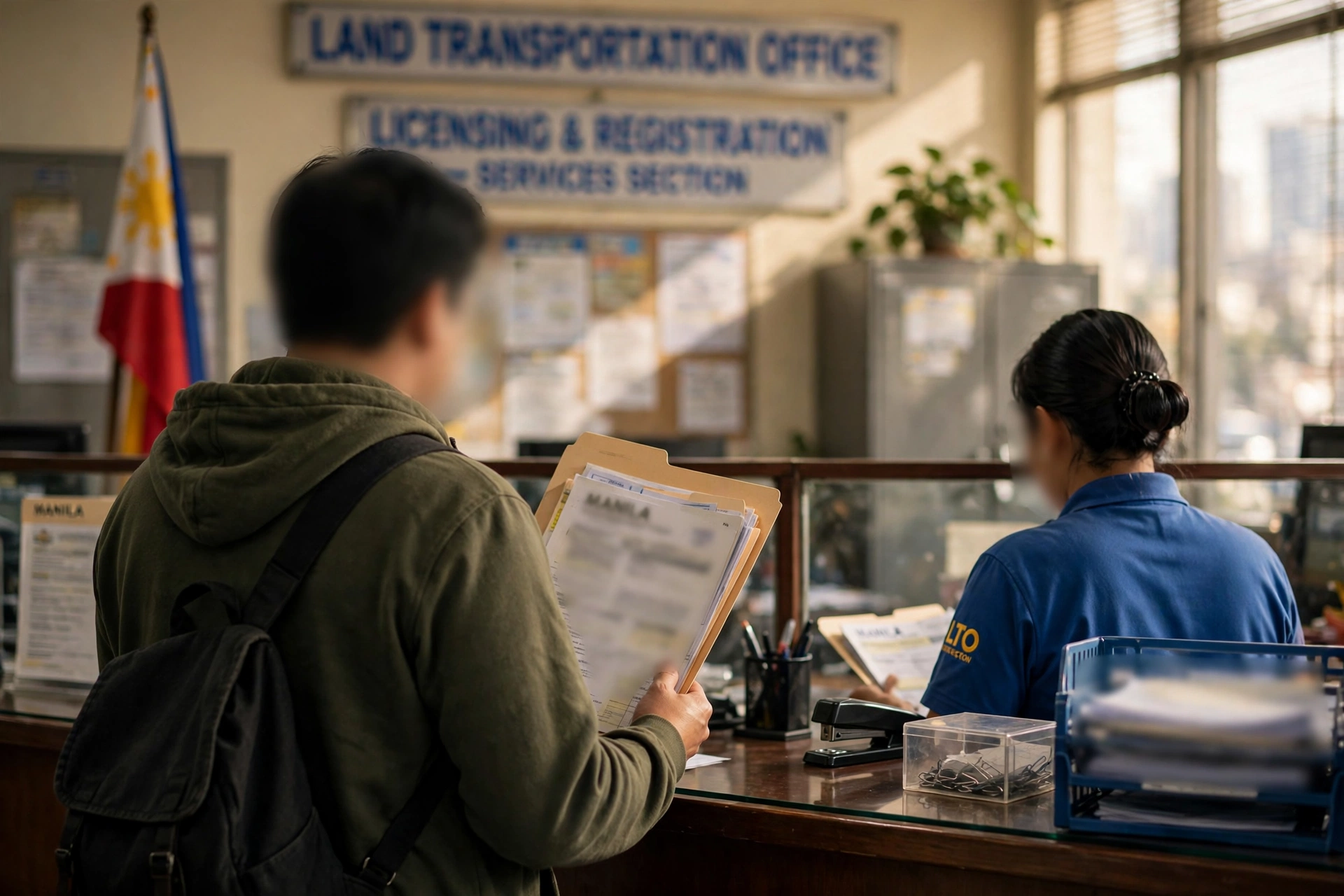
- Submit all documents at the transaction counter for evaluation and fee computation.
- Bring the vehicle to the inspection area, where an inspector verifies the new motor number against your documents and completes the Motor Vehicle Inspection Report (MVIR).
- If the inspector asks for a PMVIC inspection or an emission test, complete it as instructed — our PMVIC inspection guide explains what the inspection covers.
- Pay the assessed fees at the cashier and keep the Official Receipt — the cashier’s assessment is final.
- Collect your new CR at the releasing counter and check the new motor number before you leave — it must match your replacement engine exactly.
- Sign the CR logbook and store the new CR with your other vehicle documents.
| Step | Where it happens | What to have ready |
|---|---|---|
| 1. Get HPG clearance | HPG clearance center | Vehicle, original CR, latest OR, IDs |
| 2. Submit documents | LTO transaction counter | All documents in the table above |
| 3. Vehicle inspection | LTO inspection area | Vehicle with a clean, readable motor number |
| 4. PMVIC or emission test | As instructed | Only if required |
| 5. Pay fees | LTO cashier | Assessment slip and payment |
| 6. Collect new CR | LTO releasing counter | Official Receipt and a pen for the logbook |
If your renewal is due at the same time, the office may combine the two transactions — ask at the counter before paying, since combining them can save a visit but may add requirements such as CTPL insurance and an emission test. Check your records on the LTMS Portal before your visit so you know whether your registration is current or already due.
LTO change of engine Fees: What You Will Pay
No single official figure is published for this transaction that every source agrees on, so treat the numbers below as the commonly reported range and rely on the cashier’s assessment. The total cost of an LTO change of engine is commonly reported at ₱1,000 to ₱2,000, including LTO fees and HPG charges. That is different from a change of color — commonly reported at a ₱100 base fee plus the ₱300 PNP clearance — so do not budget for an engine change using color-change figures.
| Fee or charge | Commonly reported amount |
|---|---|
| PNP-HPG clearance certificate | ₱300 (via LandBank deposit) |
| Macro-etching or stencil | ₱200 (paid on site to the technician) |
| LTO change-of-engine registration (total, commonly reported) | ₱1,000–₱2,000 |
| Revision or record fee and computer fee | Included in the total above; itemized amounts conflict across sources |
The LTO base-fee components — the revision or record fee and the computer fee — conflict across sources, so no precise itemized breakdown is stated here. The total above is what most current guides report, and the amount on your assessment slip is what you actually pay. For a wider view of LTO charges, see our LTO fees schedule 2026.
Budget for the small extras too: photocopies, the LandBank deposit trip, and transport to the HPG center and back.
What You Receive After an LTO change of engine
Once the transaction is complete, you receive a new Certificate of Registration showing the replacement engine’s motor number — the document proving the engine in your vehicle is the one the LTO has on record.
Before you leave the counter, read the new CR line by line: check the motor number against the engine, plus the plate number, chassis number, and your name. Raise any error immediately — correcting it on the spot beats filing a correction later. Keep the new CR with your latest OR, and the old CR and HPG clearance at home as the paper trail.
Your new CR also matters at checkpoints and renewals: an officer checking your engine number against your CR will find a match. Without the update, the same check produces a mismatch that is difficult to explain at the roadside.
Common Mistakes That Delay an LTO change of engine
Most delays come from avoidable errors. The first is buying an undocumented engine: a cheap engine with no deed of sale and no papers is an application the HPG is likely to refuse. Always get the deed of sale or donation before money changes hands.
The second is letting the HPG clearance expire — commonly reported as valid for only 7 working days, so a week’s delay between the two visits can mean starting over. Plan them close together.
The third is arriving with a dirty engine bay: if the inspector or technician cannot read the motor number, the inspection stops. Clean the number area before both visits.
The fourth is forgetting the financing company’s conformity letter for an encumbered CR — the LTO will not process the change without it, and it can take days to issue. Request it as soon as you decide to change the engine.
The fifth is driving with the new engine before the CR is updated: a mismatched engine number risks apprehension and fines at checkpoints, and no exact fine figure is stated here because none was confirmed from an official source. Finish the process first.
Frequently Asked Questions About the LTO change of engine
Do I need LTO approval to replace my car’s engine?
Yes — the change must be approved by the LTO and recorded on a new CR, as Republic Act No. 4136 requires, and driving with an unrecorded engine risks apprehension.
Can I change the engine number myself if it is hard to read?
No — never grind, alter, or restamp a motor number yourself; that is prohibited under the New Anti-Carnapping Act (RA 10883). If the number is unclear, let the HPG and LTO handle it.
How long does the HPG clearance take?
Typically within 3 to 5 working days after inspection. Go to the LTO promptly afterward — the clearance is commonly reported as valid for only 7 working days.
How much does an LTO change of engine cost?
Commonly reported at ₱1,000 to ₱2,000, including LTO fees and HPG charges (₱300 clearance via LandBank deposit and ₱200 macro-etching). The cashier’s assessment is final; the itemized breakdown is not stated here because sources conflict.
Can I change the engine and renew my registration at the same time?
Often yes — ask at the transaction counter before paying, since combining them can save a second visit. A combined renewal may add requirements such as CTPL insurance and an emission test.
What if the replacement engine came from another vehicle?
You need the deed of sale or donation for the engine, showing its origin. The HPG checks the number against the carnapping database, and an engine without papers is likely to be refused.
What happens if I drive with a new engine and an old CR?
Your CR will show a motor number that does not match your engine — a mismatch that can lead to apprehension and fines at checkpoints and can block your next renewal. Complete the update before relying on the vehicle for regular use.
An LTO change of engine is a paperwork-heavy job, but a straightforward one when you arrive prepared: a documented engine, a fresh HPG clearance, complete documents, and a clean, readable motor number. Get the clearance first, go to the LTO while it is valid, check your new CR before you leave the counter, and keep the old documents — then the engine in your vehicle and the engine on your CR will finally agree.