LTO Driver’s License for Minors 2026: How 16- and 17-Year-Olds Get Licensed
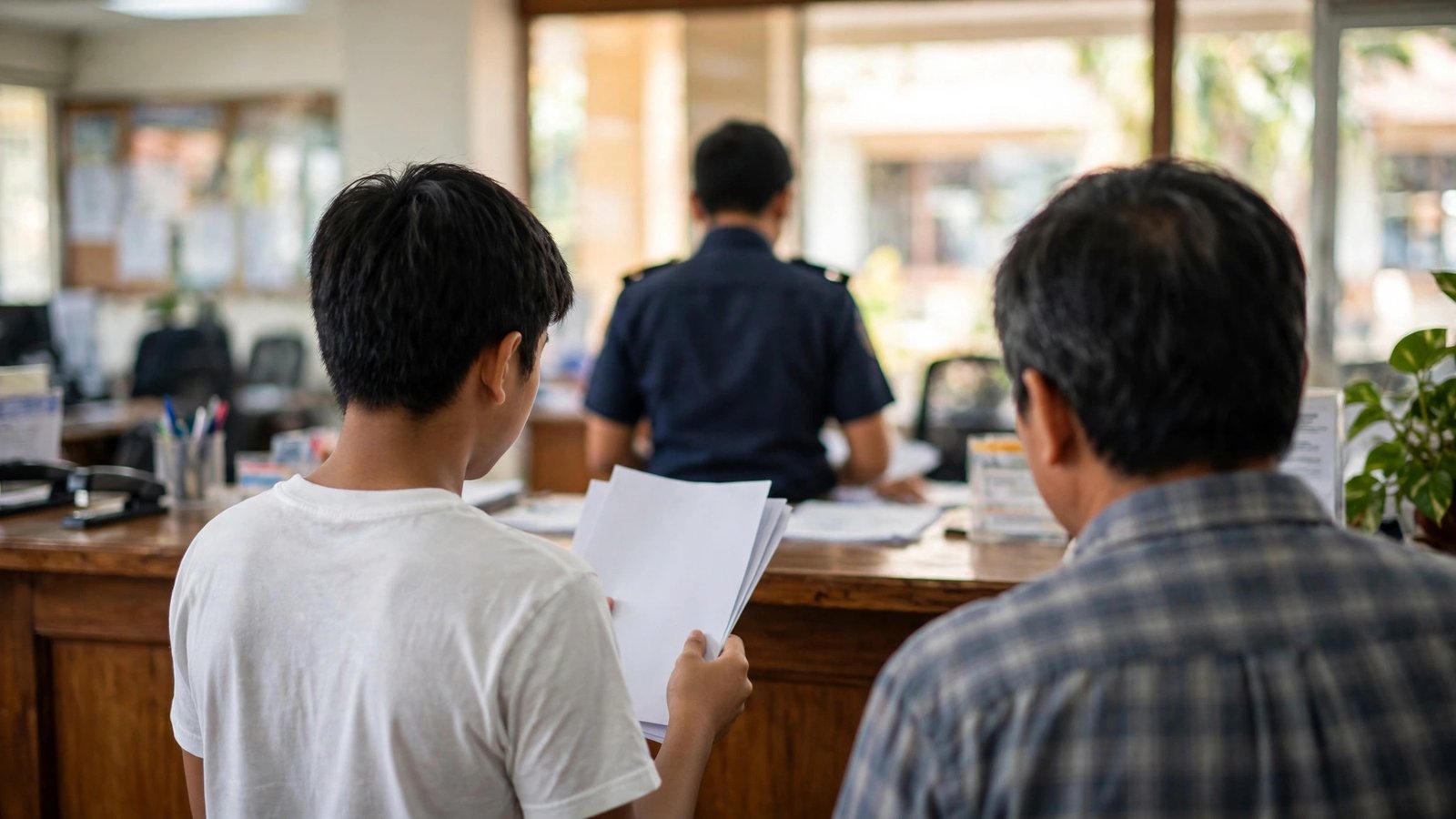
An LTO driver’s license for minors is the route Filipino teenagers take from a first student permit at 16 to a non-professional license at 17 — and, at 18, the option of a professional license. It is a staged journey, not a single application: each stage has its own minimum age, its own course, and its own rules about what you may drive and who must sit beside you. This guide explains each stage, including the consent rules, the fees, and the supervision rules — and flags the age questions that guides answer differently, so you know what to expect before you pay for anything.
What an LTO driver’s license for minors covers
The minor’s journey has three stages: a student permit at 16; a non-professional license at 17, after holding the permit for at least one month and completing the practical driving course; and a professional license at 18, once the holding period is met. A minor with a non-pro license drives private vehicles only — driving for pay needs a professional license, unavailable before 18.
Two rules run through every stage: anyone under 18 needs a parent’s or guardian’s written consent plus their valid government-issued ID with photo and signature, and a student permit never allows solo driving — a licensed driver must sit beside the holder.
How old do you need to be?
Age is the first thing to get right: the minimum age differs by license type, and some guides disagree about the student permit age.
| License type | Minimum age (Filipino citizens) | What it allows |
|---|---|---|
| Student permit | 16 | Supervised driving only, with a licensed driver beside you |
| Non-professional license | 17 | Driving private vehicles on your own |
| Professional license | 18 | Driving for pay, hire, or reward |
| Conductor’s license | 18 | Working as a conductor on a public utility vehicle |
Foreign nationals face a higher bar: the minimum age is 18 for both the student permit and the non-professional license, under Republic Act No. 4136. A foreign national under 18 cannot yet apply.
One age conflict matters before you spend money. Some guides, for example Autodeal, list 17 as the minimum age for a student permit; the majority of current guides — and this site’s own student permit guide — list 16. A 16-year-old who pays for a course and a medical exam first, then discovers they cannot apply, has wasted that money. If you are 16 and planning an LTO driver’s license for minors, confirm your eligibility on the LTMS booking screen before paying for anything. The booking system is the practical test: if it accepts your application, you are eligible; if it does not, you have lost nothing.
Parental consent: what your parent or guardian must do
No one under 18 can apply for a student permit or a non-professional license on their own signature: the Land Transportation Office requires a parent’s or guardian’s written consent for every applicant under 18, backed by proof of identity.
Bring these items when you apply:
- A written consent letter from your parent or guardian, signed by them.
- Your parent’s or guardian’s valid government-issued ID with photo and signature — original and photocopy; the LTO checks the original and keeps the copy.
- Your own proof of identity and age, such as a PSA birth certificate (original and photocopy), plus any other documents in the LTO student permit requirements.
If your parent or guardian cannot come with you, the consent generally needs to be notarized — confirm at your branch, because offices apply this rule slightly differently. A notarized consent proves the signature is genuine without the parent being there. Plan this step early: a missing or unnotarized consent is one of the most common reasons a minor’s application is turned away.
The six steps from student permit to non-pro license
The full journey from first application to a non-professional license has six steps. Do them in order — each step unlocks the next one, and skipping ahead wastes time and money.
- Create your LTMS account and check your eligibility. Register on the LTMS Portal with your own email address and details, and if you are 16, check the booking screen accepts your age before you pay for anything.
- Complete the Theoretical Driving Course (TDC): a 15-hour course on traffic rules, road signs, and safe driving, required before you can apply for a student permit. It is free at an LTO Driver’s Education Center, or you can take it at a private driving school for a fee. See our LTO theoretical driving course guide for what the course covers.
- Pass the medical exam. Get your medical certificate from an LTO-accredited clinic; the exam typically costs ₱300–₱500, and the result goes to the LTO electronically, so use the same details as your LTMS account.
- Apply for your student permit at 16. Go to an LTO licensing center or district office with your parent or guardian, your TDC certificate, medical result, birth certificate, and your parent’s consent and ID, and pay the ₱317.63 student permit fee; your permit is valid for one year.
- Hold the permit for at least one month and complete the Practical Driving Course (PDC). You must hold a valid student permit for at least one month (31 days) before applying for a non-professional license. During that month, complete the 8-hour PDC at an accredited driving school and practice driving — always supervised.
- Apply for your non-professional license at 17. Return to the LTO with your student permit, PDC certificate, medical result, and your parent’s consent and ID. Take the written exam and the practical driving test, then pay the non-professional license fee of ₱585 plus the application and computer charges on your official receipt. For the full document list, see our guide to the LTO non-pro license requirements.
What a student permit lets you do — and what it does not
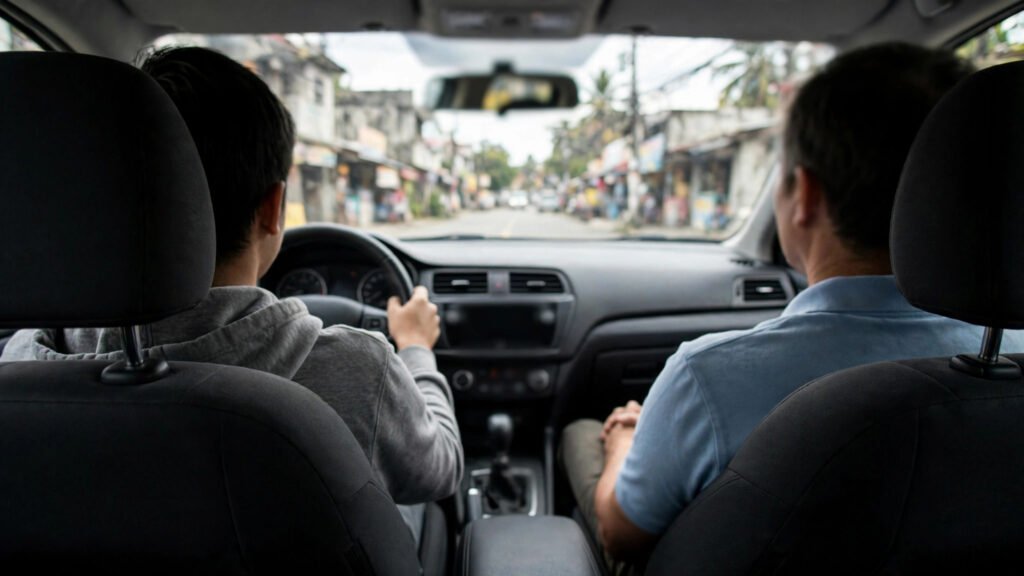
The first stage of an LTO driver’s license for minors is a learner’s document, not a license to drive on your own. It allows supervised driving only: a licensed driver must sit beside the permit holder at all times, in the front passenger seat, ready to take over. The law treats that presence as part of the permit itself.
Driving alone on a student permit counts as driving without a valid license, and the penalty is a ₱3,000 fine under Joint Administrative Order No. 2014-01 — even if you drive well and nothing goes wrong, because the offence is driving without a licensed supervisor, not how you drove. The same applies to a companion who is not a licensed driver: a friend your own age, a sibling without a license, or a parent who does not hold a license does not count.
A student permit also does not allow you to drive for pay or as part of any job — it is strictly for learning. Any work involving driving, from deliveries to driving a family business vehicle, needs a professional license, only available from age 18.
What minors can and cannot drive
An LTO driver’s license for minors carries the same restriction codes as an adult’s: they govern what vehicles you may drive. Your codes are set by the vehicle you trained on and tested in — most new teen drivers start with codes for motorcycles and light private cars. Our guide to LTO driver’s license restriction codes explains what each code covers and how to add one later.
| Stage | What you may drive | What you may not do |
|---|---|---|
| Student permit (16) | A vehicle matching your course, only with a licensed driver beside you | Drive alone, drive for pay, drive without a supervisor |
| Non-pro license (17) | Private vehicles within your restriction codes, on your own | Drive for pay, drive a public utility vehicle, drive outside your codes |
| Professional license (18) | Vehicles within your codes, including driving for pay | Drive outside your codes, or drive a vehicle class you are not coded for |
The most important limit for a 17-year-old with a non-pro license is the private-vehicles-only rule: it covers personal and family driving — school, errands, the family car. The moment driving becomes paid work, you need a professional license, which cannot happen before 18. This catches out teenagers offered delivery or driving work: the job may be legal for an adult, but a minor with only a non-pro license cannot legally take it.
Demerit points apply to minors the same as adults: traffic violations add points to your record under the LTO’s demerit system, and enough points can lead to suspension or a blocked renewal. A clean record as a teenager is worth protecting: it follows you into your adult license and qualifies you for a longer validity at renewal.
Fees and validity at a glance
The costs below are the official LTO fees and the figures most commonly reported for the other steps; medical exam and private course fees vary, so treat those as typical ranges and confirm the exact amount where you book.
| Item | Typical cost | Validity / notes |
|---|---|---|
| Theoretical Driving Course (TDC) | Free at an LTO Driver’s Education Center; private-school fee varies | 15 hours; required before a student permit |
| Medical exam | Typically ₱300–₱500 | Result submitted electronically to the LTO |
| Student permit | ₱317.63 | Valid for 1 year |
| Practical Driving Course (PDC) | Private-school fee varies | 8 hours; required before a non-pro license |
| Non-professional license | ₱585, plus application and computer charges on the official receipt | 5 years under Republic Act No. 10930 |
One validity question is genuinely contested. Some current guides, citing the LTO Citizen’s Charter, report that a student permit can be renewed once for a second year; Motorist.ph, in a guide dated 26 October 2026, reports that student permits cannot be renewed at all. The two positions cannot both be right, and this guide cannot settle the dispute from official sources. Treat your one-year permit as your window: complete your PDC and apply for your non-pro license well within that year, and if your permit is about to expire, confirm at your branch whether renewal is possible.
Turning 18: what changes — and what does not
Turning 18 changes nothing automatically. Your non-professional license continues exactly as before, with the same restriction codes and expiry date — no new card, no upgrade to file, no fee to pay because you had a birthday. The only thing that changes at 18 is eligibility: the professional license becomes available, once you have held your non-pro license long enough.
The holding period depends on your restriction codes: with DL codes A or A1 (motorcycles), you must have held your non-pro license for at least 6 months before applying for a professional license; with codes B, B1, or B2 (cars and light vehicles), the holding period is at least 1 year. Count from the date your non-pro license was issued and apply only after the period has fully passed — applying early means a rejected application.
One more conflict: the professional license minimum age is 18 under the standard rule, but some guides list 21. If you are under 21 and planning to upgrade, confirm at your licensing center before booking a course or a medical exam. The same age-18 minimum applies to a conductor’s license, a separate license for working as a conductor on a public utility vehicle.
Frequently asked questions about LTO driver’s license for minors
1. At what age can I get an LTO driver’s license for minors? A Filipino citizen can apply for a student permit at 16 and a non-professional license at 17, after holding the student permit for at least one month; a professional license becomes available at 18, once the holding period is met. Foreign nationals must be at least 18 for both the student permit and the non-professional license.
2. Can my parent just send a signed letter, or do they need to come with me? A signed written consent letter is required, with your parent’s or guardian’s valid government-issued ID with photo and signature (original and photocopy). If your parent or guardian cannot accompany you, the consent generally needs notarizing — confirm at your branch.
3. Can I drive alone on a student permit if I am a careful driver? No. A student permit allows supervised driving only, with a licensed driver beside you at all times. Driving alone counts as driving without a valid license and carries a ₱3,000 fine under Joint Administrative Order No. 2014-01.
4. How long is a student permit valid, and can it be renewed? A student permit is valid for one year. Whether it can be renewed for a second year is contested: some current guides report one renewal is allowed under the LTO Citizen’s Charter, while Motorist.ph (26 October 2026) reports permits cannot be renewed. Confirm at your branch, and finish your PDC and non-pro application within the year.
5. Can a 17-year-old with a non-pro license take a delivery or driving job? No. A non-professional license covers private vehicles only; driving for pay needs a professional license, available only from age 18 after the required holding period. A minor with a non-pro license driving for work is driving outside what the license allows.
6. Do I need to retake any test when I turn 18? No. Your non-professional license continues unchanged at 18 — same codes, same expiry date. Turning 18 only makes you eligible for a professional license, once you have held your non-pro license for 6 months (codes A/A1) or 1 year (codes B/B1/B2).
Getting an LTO driver’s license for minors is a three-year journey in the best sense: a student permit at 16 to learn under supervision, a non-professional license at 17 to drive on your own, and the professional option at 18 once the holding period is met. Bring your parent or guardian into every step, confirm your age eligibility on the LTMS booking screen before paying for a course or a medical exam, and treat your one-year permit as a deadline. Do that, and you will reach 18 with a clean record, the right codes, and a license earned properly.