LTO Theoretical Driving Course 2026: The 15-Hour TDC Guide for Your Student Permit
The LTO theoretical driving course is the 15-hour classroom course every first-time driver in the Philippines must complete before applying for a student permit. Known as the TDC, it teaches the basics every new driver needs: traffic laws, road signs, defensive driving, and how a vehicle works. You take it at an LTO Driver’s Education Center for free, at an LTO-accredited driving school, or online through an accredited provider — then you take a final exam, receive your certificate, and use it to apply for your student permit.
The short version: enroll in the 15-hour TDC at a free LTO Driver’s Education Center or an accredited driving school, complete all three 5-hour sessions, pass the final exam with at least 80 percent, and receive your TDC Certificate of Completion. The school sends your certificate to the LTO electronically. Then apply for your student permit through the LTMS Portal with your certificate, medical certificate, and other requirements.
What the LTO theoretical driving course is
The LTO theoretical driving course is a mandatory pre-licensing course created by the Land Transportation Office for people who have never held a driver’s license. It came into effect on 6 April 2020 under LTO Memorandum Circular 2019-2176, and since then no one can apply for a student permit without completing it first. The course exists for a simple reason: a new driver should understand the rules of the road before ever sitting behind the wheel.
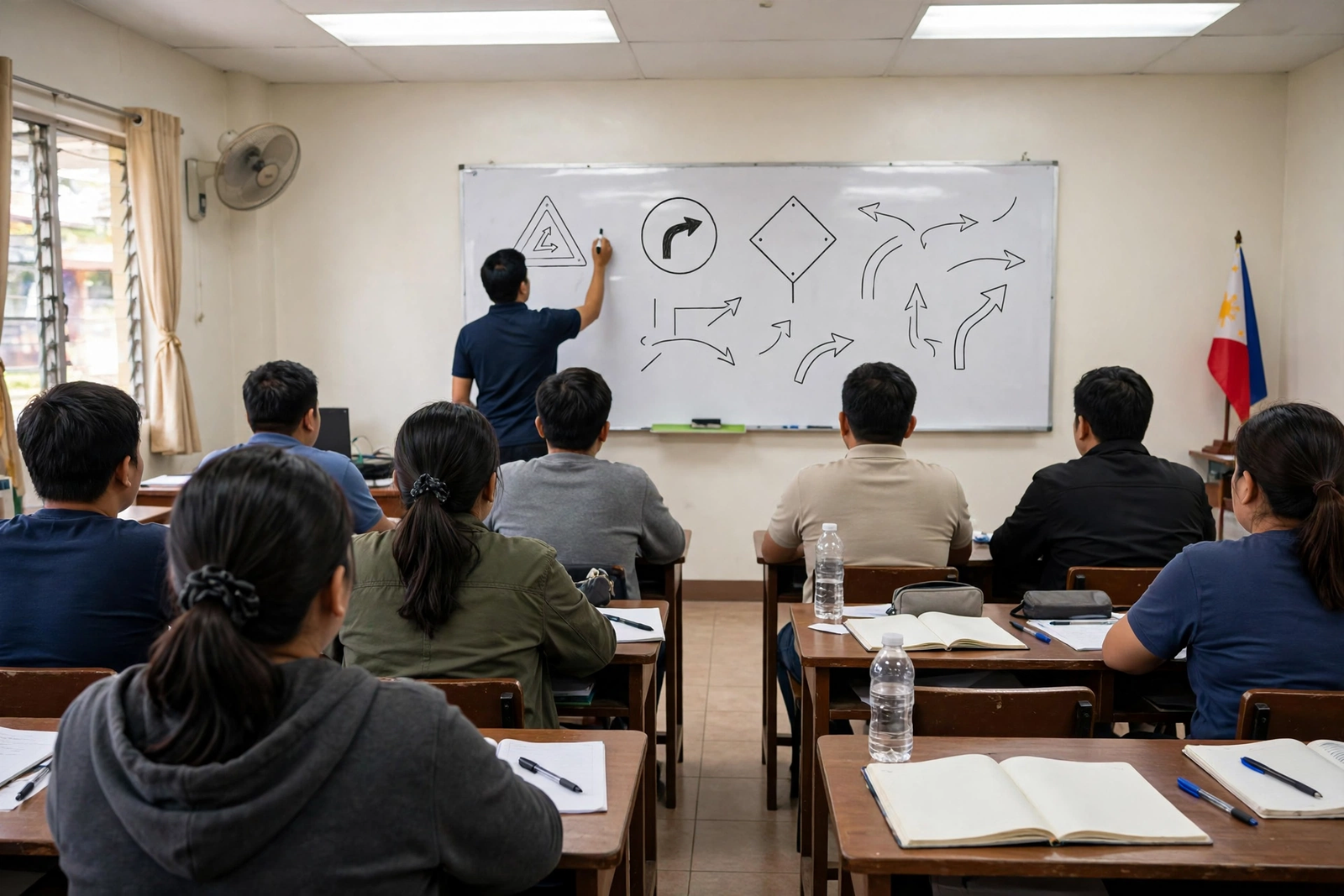
The course is 15 hours long, divided into three sessions of five hours each. It is classroom learning — there is no driving involved. You listen, take notes, ask questions, and study the material, and at the end you take a final written exam. Pass the exam and you receive a Certificate of Completion, which is one of the documents you need for your student permit application. Fail the exam and you retake it at the same school or center where you took the course.
The LTO theoretical driving course is the first step in the licensing ladder, not the whole journey. After the TDC comes the student permit, then the 8-hour Practical Driving Course (PDC), where you actually learn to drive, and then the non-professional license. Do not confuse the TDC with the CDE (Comprehensive Driver’s Education), the refresher course for drivers who already hold a license and are renewing it.
Who must take the LTO theoretical driving course
Every first-time applicant for a student permit must complete the TDC. There are no shortcuts and no exemptions for beginners: whether you are 16 and applying for your first permit, or an adult who has never held a license, the 15-hour course comes first. You must also be at least 16 years old if you are a Filipino citizen, or at least 18 if you are a foreign national, and you must be able to read and write in Filipino or English.
You do not need a student permit, a vehicle, or any driving experience to enroll — the TDC is designed for complete beginners. You also do not need to take the medical exam first, although many applicants do the medical exam around the same time so both requirements are ready together. Our student permit requirements guide lists everything you need for the permit itself, including the medical certificate and the fees, so you can plan the whole application in one go.
If you already hold a student permit or a driver’s license, you do not need the TDC again — it is a one-time requirement for first-time applicants. And if your student permit has expired and you need to start over, check with your branch whether your old TDC certificate is still accepted or whether you need to retake the course, since the certificate is commonly reported to be valid for one year from the date it was issued.
What the 15 hours cover
The TDC curriculum is structured into three sessions of five hours each, usually run over two days, although some schools spread them differently — one guide notes that LTO allows schools to run the course over two days within a month. The topics build on each other, from the basics of the LTO and the law to defensive driving and emergencies:
| Session | What it covers | Time |
|---|---|---|
| Session 1 | Introduction to driving; the role and history of the LTO; road and traffic rules; traffic signs, signals, and pavement markings; written examination | 5 hours |
| Session 2 | Defensive driving; motor vehicle parts, operation, and maintenance; road courtesy; written examination and review | 5 hours |
| Session 3 | Driving safety and emergencies; handling emergency situations; driver rights and responsibilities; penalties and violations; final examination | 5 hours |
Across the three sessions, the topics are the same in every guide: the role of the LTO, traffic signs and road markings, traffic rules and right of way, defensive driving, basic vehicle operation and maintenance, emergency handling, road courtesy, driver rights and responsibilities, and the penalties for violations.
Pay attention to road signs and right-of-way rules in particular — they appear most often in the final exam. Take notes and review them before the exam.
Where to take the LTO theoretical driving course: free, paid, and online
You have three ways to take the TDC. All three lead to the same certificate, so choose the option that fits your schedule, your location, and your budget:
| Option | Where | Cost | Best for |
|---|---|---|---|
| LTO Driver’s Education Center (DEC) | At LTO offices and Driver’s Education Centers nationwide | Free | Drivers who can wait for a scheduled session and want to pay nothing |
| LTO-accredited driving school (face-to-face) | Private driving schools accredited by the LTO | Paid — see the fees section below | Drivers who want flexible schedules, smaller classes, or a school near home |
| Online TDC (OTDC) | Accredited providers offering the course online | Paid — see the fees section below | Drivers who prefer to study from home at their own pace |
The free option is the LTO Driver’s Education Center. The TDC is completely free at DECs, taught by LTO-accredited instructors on staff. The catch is availability: DEC sessions run on the office’s timetable, and slots can fill up, so ask at your nearest LTO office when the next TDC session is scheduled and how to reserve a place.
Private accredited driving schools offer the same 15-hour course face-to-face, usually with smaller classes and more flexible schedules, and also online through accredited providers, where you study the modules on your own schedule. Whichever provider you choose, check first that the school is genuinely LTO-accredited: only accredited schools can send your certificate to the LTO electronically, and a certificate from an unaccredited school will not be accepted. Confirm accreditation before you pay anything.
How to enroll and complete the LTO theoretical driving course step by step
Enrolling is straightforward. The exact steps vary slightly between a DEC and a private school, but the order is the same:
| Step | What to do |
|---|---|
| 1. Choose your provider | Pick a free LTO Driver’s Education Center, an accredited driving school, or an accredited online provider |
| 2. Check accreditation | Confirm the school or provider is LTO-accredited before enrolling or paying |
| 3. Register and pay (if paid) | Fill in the registration form and pay the course fee, if any; confirm the exact fee before paying |
| 4. Attend Session 1 | Complete the first 5-hour session: introduction, LTO role, traffic rules, signs and markings |
| 5. Attend Session 2 | Complete the second 5-hour session: defensive driving, vehicle parts and maintenance, road courtesy |
| 6. Attend Session 3 | Complete the third 5-hour session: safety, emergencies, rights and responsibilities, penalties |
| 7. Take the final exam | Sit the written exam at the end of the course and score at least 80 percent to pass |
| 8. Receive your certificate | Get your TDC Certificate of Completion; the school transmits it to the LTO electronically |
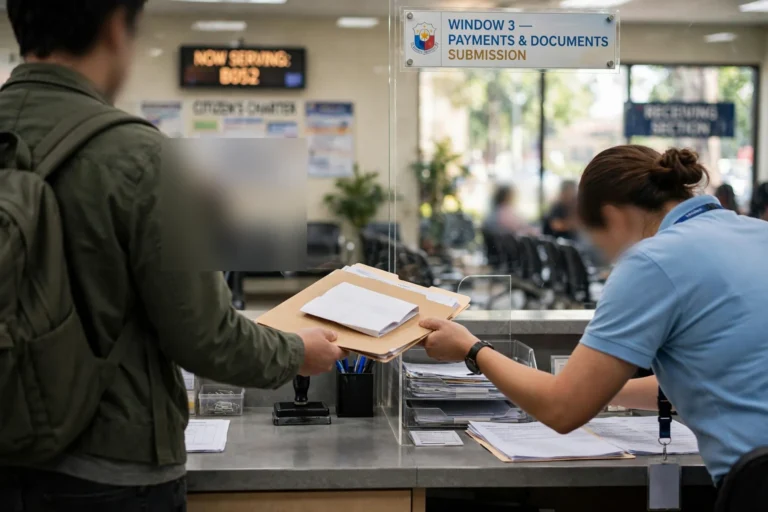
| 9. Apply for your student permit | Use the certificate with your medical certificate and other documents to apply through the LTMS Portal |
You must attend and complete all three sessions to qualify for the final exam. Bring a valid ID when you enroll, and a notebook and pen to every session. If you take the course online, make sure you have a stable internet connection and a device that can play the videos and load the modules, and confirm with the provider how the final exam is scheduled.
After you finish, keep your printed certificate safe and bring it to your student permit appointment as a backup, in case the electronic record has not synced yet. The certificate must show the driving school’s LTO accreditation number — check that it does before you leave the school.
The TDC final exam: 80 percent to pass
At the end of the 15-hour course, you take a final written exam that tests what the course taught. You need a score of at least 80 percent to pass. The exam covers the full curriculum: traffic signs and markings, road and traffic rules, defensive driving, vehicle operation and maintenance, emergencies, and penalties. One guide reports the final exam as 120 questions, but that figure comes from a single source and was not confirmed elsewhere, so treat the question count as unconfirmed and focus on the passing mark, which every guide agrees is 80 percent.
If you fail, you retake the exam at the same school or center where you completed the course. Students who attended all three sessions and reviewed their notes usually pass on the first attempt. For extra practice, try our free LTO exam reviewer before your exam day.
The exam rewards understanding, not memorization: if a question confuses you, think about what the safest and most lawful action would be — that is usually the correct answer.
Your TDC certificate and what happens next
When you pass the final exam, you receive your TDC Certificate of Completion. The school transmits it to the LTO electronically, and the certificate is commonly reported to be valid for one year from the date it was issued — so do not sit on it for too long. Apply for your student permit while the certificate is fresh, and well within that year, to avoid having to retake the course.
With your certificate in hand, the next step is the student permit itself. You will need your TDC certificate, a medical certificate from an LTO-accredited clinic (also transmitted electronically, and valid for 60 days), your PSA-authenticated birth certificate, and a valid ID — plus a notarized parent’s or guardian’s consent with a copy of their photo ID if you are below 18. The student permit costs ₱317.63 in official LTO fees (₱150 permit fee, ₱100 application fee, and the ₱67.63 computer fee), plus your medical certificate.
Once your student permit is issued, it is valid for one year, and you must wait at least 31 days before applying for a non-professional license. During that waiting period, enroll in the 8-hour Practical Driving Course (PDC) — the hands-on course where you actually learn to drive. Our non-pro license requirements guide explains the PDC and the whole non-professional license process.

What the LTO theoretical driving course costs
The cost depends entirely on where you take the course. The free option is genuinely free; the paid options vary, and the prices guides report do not all agree — so read this section carefully before you enroll:
| Option | Cost |
|---|---|
| LTO Driver’s Education Center (DEC) | Free |
| LTO-accredited driving school (face-to-face) | Commonly reported ₱1,500–₱2,500; some schools advertise all-in packages up to around ₱2,750 |
| Online TDC (OTDC) | Commonly reported ₱1,000–₱1,500; some schools advertise all-in online packages up to around ₱2,850 |
| Student permit fees (paid later at the LTO) | ₱317.63 (₱150 + ₱100 + ₱67.63) |
| Medical certificate (LTO-accredited clinic) | Commonly reported ₱300–₱500 |
One important conflict: several current 2026 guides say the LTO capped the basic TDC fee at ₱1,000 in 2023, yet accredited schools openly advertise all-in packages well above that — commonly ₱1,500 to ₱2,850. The cap, as reported, appears to cover the basic course fee, while advertised packages may bundle extras. Confirm the exact fee with the school before you enroll, ask what is included, and keep your receipt. Never pay a school that cannot show its LTO accreditation.
Common mistakes to avoid
Enrolling at an unaccredited school. Only LTO-accredited schools can send your certificate to the LTO. Always confirm accreditation before paying, and ask to see it in writing.
Skipping a session. You must complete all 15 hours to take the final exam. If you miss a session, ask the school how to make it up — do not assume you can skip it and still sit the exam.
Waiting too long after the course. The TDC certificate is commonly reported to be valid for one year. Apply for your student permit promptly; if you wait beyond a year, you may have to retake the course.
Forgetting the medical certificate’s short validity. The medical certificate is valid for 60 days, so time it with your student permit application — do not get it months before you apply.
Paying more than you agreed. Confirm the full fee, including any extras, before you enroll. Get a receipt for every payment, and be wary of anyone who asks for cash with no receipt or promises a certificate without the course or the exam.
Confusing the TDC with the CDE or PDC. The TDC is the 15-hour theory course before the student permit. The PDC is the 8-hour practical course after the student permit. The CDE is the refresher for renewing drivers. Each has its own certificate, and one cannot substitute for another.
Frequently asked questions about the LTO theoretical driving course
How long is the LTO theoretical driving course?
The course is 15 hours long, divided into three sessions of five hours each. Sessions are typically run over two days, although some schools spread them differently. You must complete all three sessions to qualify for the final exam.
Is the LTO theoretical driving course free?
It is free at LTO Driver’s Education Centers. At private accredited driving schools, face-to-face courses are commonly reported at ₱1,500–₱2,500, and online courses at ₱1,000–₱1,500, although some schools advertise all-in packages above those ranges. Confirm the exact fee before enrolling.
Can I take the LTO theoretical driving course online?
Yes. Some LTO-accredited driving schools offer an online TDC (OTDC), where you study the modules from home at your own pace. Make sure the provider is genuinely LTO-accredited, and confirm with them how the final exam is arranged — some hold it online, others at their office.
What is the passing score for the TDC final exam?
You need at least 80 percent to pass the final written exam. If you fail, you retake the exam at the same school or center where you completed the course.
How long is the TDC certificate valid?
The TDC certificate is commonly reported to be valid for one year from the date it was issued — confirm it with your school or branch, and apply for your student permit promptly rather than waiting.
Do I need the TDC if I already have a student permit or a license?
No. The TDC is a one-time requirement for first-time student permit applicants. If you already hold a student permit or a driver’s license, you do not take it again. If your student permit expired and you are starting over, check with your branch whether your old TDC certificate is still accepted.
What comes after the TDC?
After the TDC, you apply for your student permit, which is valid for one year. After holding the permit for at least 31 days, you take the 8-hour Practical Driving Course (PDC) and apply for a non-professional license. The LTO fees schedule 2026 guide lists the standard fees for each step.
The LTO theoretical driving course is the first real step toward your license, and it is worth taking seriously: the rules, signs, and defensive-driving habits you learn in those 15 hours are the same ones that keep you safe for every year you drive. Choose an accredited provider, finish all three sessions, pass the exam, and apply for your student permit while your certificate is fresh.