LTO Change of Address Driver’s License Guide 2026
LTO change of address driver’s license is the official way to update the home address on your driver’s license record when you move to a new address. If you have recently transferred to a new barangay, city, or province, your old address on your license no longer matches where you actually live, and that mismatch can cause confusion during traffic stops, license renewals, and other transactions. This guide explains exactly what the transaction is, what documents you need, how to do it online through the LTMS portal or in person at an LTO office, how much it commonly costs, and the mistakes that cause the most delays.
What “Revision of Records — Change of Address” Means
At the LTO, this transaction is officially called “Revision of Records — Change of Address.” It updates the address stored on your driver’s license record and reprints your card with the new address.
It is important to understand what this transaction is not. It is NOT a renewal, and it does NOT extend your license validity. Your expiry date stays exactly the same after a change of address. If your license expires in 2027, it will still expire in 2027 after you update your address. You are only changing the address information, not getting a new validity period.
This distinction matters because many drivers assume that paying for a new card means getting extra years on their license. That is not how it works. Think of it as correcting a record, not renewing a privilege. If your license is also close to expiring, you may want to consider handling the renewal at the same time, which is covered later in this guide.
Who Needs to Update Their License Address
You should update your license address whenever you move to a new residence. This applies whether you moved across the street to a different barangay or relocated to an entirely different city or province. The address on your license should reflect where you currently live, because it is the address the LTO has on file for you.
Keeping your address current also makes future transactions smoother. An LTO change of address driver’s license update is a small task, but it keeps your record accurate, and when you renew later, the LTO will already have your correct address.
Requirements for LTO Change of Address
Before you start, prepare the following documents. Having everything ready before you visit an office or open the LTMS portal will save you a return trip.
- A duly accomplished Application for Driver’s License (ADL) form. This is the standard application form used for driver’s license transactions. Fill it out completely and honestly, and double-check that your new address is written correctly before you submit it.
- Your current or expired driver’s license, original plus a photocopy. Bring the physical card itself, and have a photocopy ready as well. Do not leave your original license at home, because the office needs to verify it against your record.
- Proof of your new address. You can present either of the following: a barangay certificate or clearance for your new barangay, or proof of current billing in your name showing the new address. Acceptable billing proof commonly includes a utility bill or a bank or credit card statement, as long as it is in your name and shows your new address.
The proof-of-address requirement is where most applications run into trouble, so take it seriously. The document must show your new address, not your old one, and it must be in your name. A barangay certificate from your old barangay does not prove your new address. A utility bill in a spouse’s, parent’s, or landlord’s name does not prove that you live there, at least not on its own. If your bills are not in your name, a barangay certificate for your new barangay is usually the simpler route. Confirm at your branch if you are unsure whether a particular document will be accepted, because acceptance can vary by office.
LTO change of address driver’s license online (LTMS route)
The LTMS portal lets you start this transaction online. The online route is convenient because you can fill out the application and upload your documents from home, but take note that a branch visit may still be required for biometrics and card printing. Here is the step-by-step process:
- Log in to the LTMS portal using your existing account. If you do not have an account yet, you will need to register first. For a full walkthrough of the portal, see our LTMS portal guide.
- From the dashboard, go to Driver’s License, then choose Revision of Records.
- Select the address category for the change you want to make.
- Enter your new address carefully: house number, street, village or subdivision, province, city or municipality, and barangay, using the dropdowns provided. Take your time here, because any spelling error you type may end up printed on your new card.
- Upload your proof of address. Keep your scans clear and readable, and make sure they are within the portal’s file-size limit. A blurry photo of a document is a common reason for delays, so scan or photograph your document in good lighting and check that all text is legible before uploading.
- Submit your application for officer evaluation. An LTO officer will review your submitted details and documents.
- Pay the assessed fees through the available payment channel.
- Complete any required branch visit for biometrics and card printing. The portal will indicate what remains to be done in person, so follow the instructions shown on your application.
If the online system returns your application for correction, read the evaluator’s remarks carefully and fix only what was flagged.
How to Change Your Address In Person
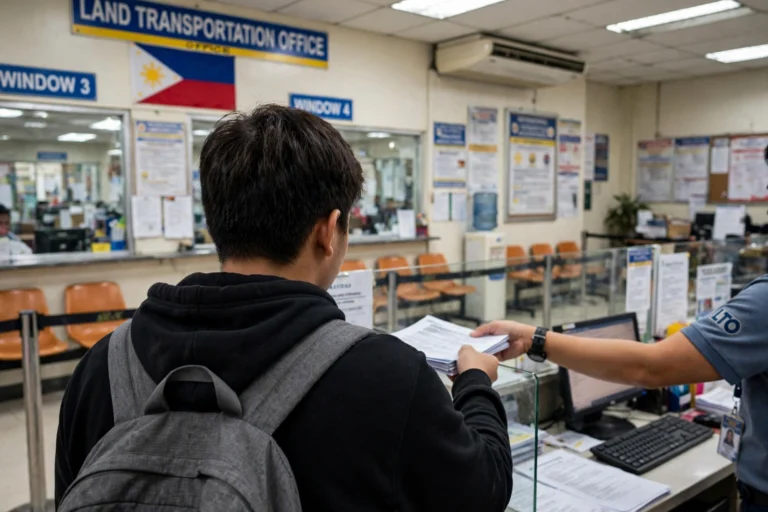
If you prefer to handle everything face to face, or if the online route is not working for you, you can go to an LTO office in person. Follow these steps:
- Go to an LTO District Office or Licensing Center that handles Revision of Records. This is an important detail: many mall-based Driver’s License Renewal Offices (DLROs) do NOT handle revision transactions, so confirm the office handles it before going. You can check our LTO branch directory to find an office near you, and call ahead if you can to confirm that the office processes Revision of Records.
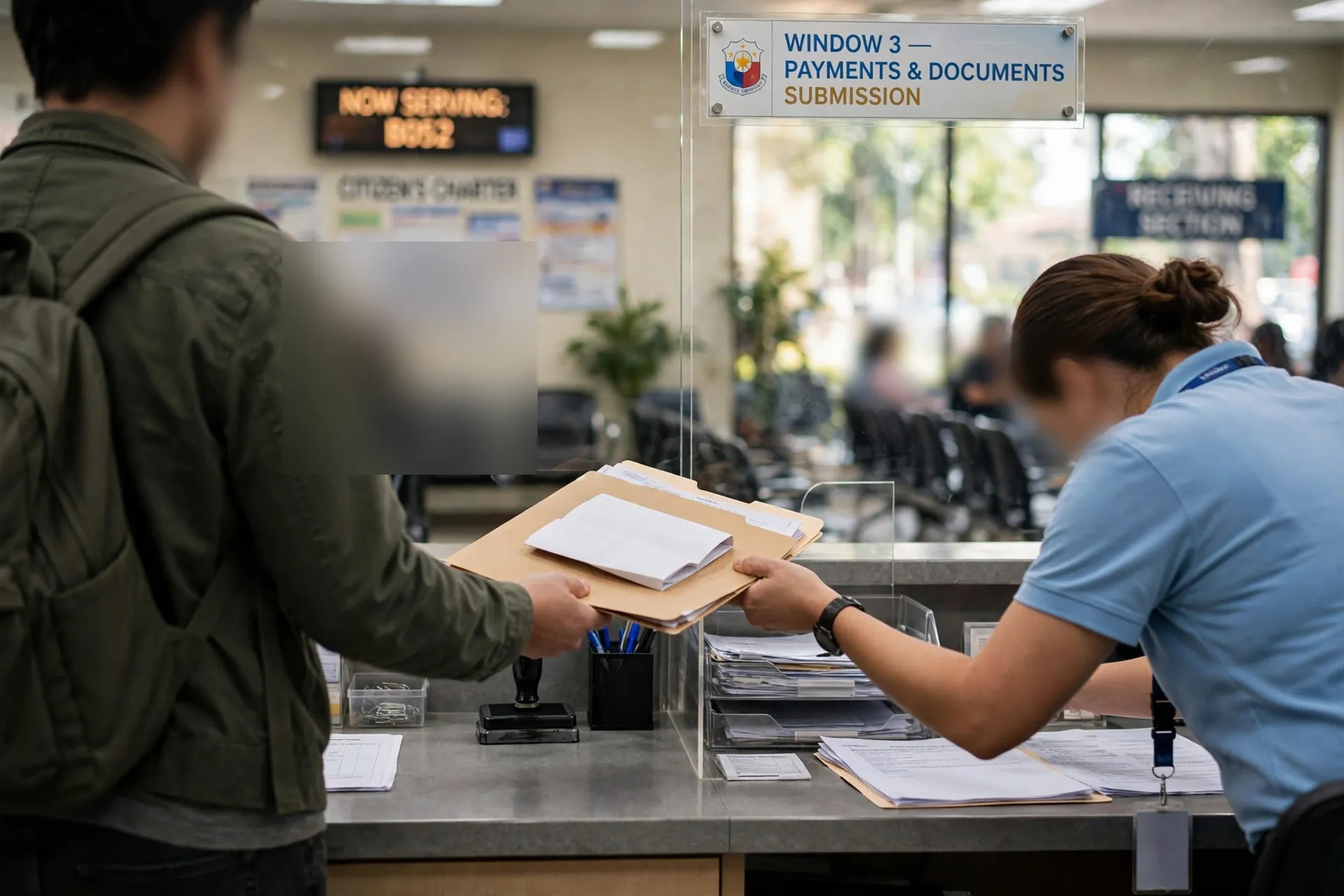
- Submit your duly accomplished ADL form together with your original license, its photocopy, and your proof of new address.
- Wait for evaluation. An evaluator will check your documents and your record.
- Pay the assessed fees at the cashier. Keep your official receipt safe.
- Proceed to biometrics and photo capture.
- Wait for your new card to be printed with your updated address.
Bring your old license and all receipts with you, and keep them until the new card is actually in your hand. Do not drive while the revision is pending without your old card or receipt, because you may be asked to present proof of your license. Confirm the processing time at the office, since it can vary depending on card availability and volume of applicants.
Fees for Changing Your License Address
The fees for this transaction are commonly listed as follows. Please note that the cashier’s assessment at the time of your transaction is final, and sources conflict on whether the computer fee applies, so the total below is a commonly listed figure rather than an officially confirmed one.
| Fee item | Commonly listed amount |
|---|---|
| Replacement fee | ₱225 |
| Revision fee | ₱100 |
| Computer fee | ₱67.63 |
| Commonly listed total | ₱392.63 |
Some guides cite ₱325 without the computer fee, which is the replacement fee plus the revision fee only. The difference comes down to whether the computer fee is charged for this transaction, and published sources do not agree on that point. To avoid surprises, it is wise to bring slightly more than the lower figure and to confirm the exact assessment at the cashier before paying. Do not treat either total as officially confirmed by the LTO.
Combining a Change of Address With Renewal
If your license is due for renewal around the same time you move, you can handle both transactions together. When renewing at the same time, the revision fee of ₱100 is commonly added on top of the renewal fees. This is a commonly listed arrangement, so confirm it at assessment when you transact.
Combining the two can save you a second trip, but make sure you also meet all the renewal requirements, which are separate from the change-of-address requirements. For the full list of what renewal needs, including the medical exam and other steps, see our driver’s license renewal requirements guide. If you are unsure whether combining is possible at your chosen office, ask before you line up, so you do not waste a trip.
Your License Address vs. Your Vehicle Registration Address
One common point of confusion deserves a clear warning: the address on your driver’s license and the address on a vehicle’s registration (OR/CR) are two separate matters. Updating your license address does not change the address on any vehicle’s OR/CR, and changing a vehicle’s registration address does not update your license.
If you also need to update vehicle records, that is a different transaction with its own requirements. For vehicle-record changes, such as transferring a vehicle to a new owner, see our change of vehicle ownership guide. Note that the ownership guide covers vehicle-record changes, not license address changes, so do not expect it to answer questions about your driver’s license. Keep the two transactions separate in your mind, and handle each one on its own track.
Common Mistakes to Avoid
These are the mistakes that most often delay or derail a change-of-address application:
- Submitting proof of billing in someone else’s name. The billing document must be in your name and show your new address. If your bills are under another person’s name, get a barangay certificate for your new barangay instead.
- Presenting a barangay certificate from your old barangay. The certificate must be for the barangay where you now live, because that is the address you are trying to prove.
- Going to a DLRO expecting it to process the revision. Many mall-based Driver’s License Renewal Offices do not handle Revision of Records. Confirm the office handles it before going, or you may be turned away after waiting in line.
- Expecting a longer validity. A change of address does not extend your license. Your expiry date stays the same, so plan your renewal separately if it is coming up.
- Driving while the revision is pending without your old card or receipt. Keep your old license and all receipts with you until the new card is in your hand. If an enforcer asks for your license, you need something to show.
A little preparation prevents most of these problems. Before you leave home, check your documents one by one: ADL form filled out, original license plus photocopy, proof of new address in your name and for your new barangay.
What to Check on Your New Card
When you receive your new card, do not just put it in your wallet and walk away. Check these details on the spot, while you are still at the office and corrections are easiest to make:
- The spelling of your street and barangay. Compare it against your ADL form and your proof of address. A misspelled street or barangay name can cause the same confusion you were trying to fix.
- Your license number, which should be unchanged. A change of address does not give you a new license number, so if the number looks different, raise it immediately.
- Your expiry date, which should also be unchanged. Remember, this transaction does not extend your validity. If the expiry date moved, ask the staff about it before leaving.
If anything is wrong, point it out at the counter right away. Correcting an error later means another transaction, another queue, and possibly another fee, so a one-minute check at the counter is well worth it.
Frequently Asked Questions
Does changing my address extend my license validity?
No. A change of address is a Revision of Records transaction, not a renewal. Your expiry date stays the same, and your license number stays the same as well. Only the address on your record and your card changes.
Can I change my address at any LTO office?
Not every office handles Revision of Records. Many mall-based Driver’s License Renewal Offices (DLROs) do not process revision transactions, so confirm the office handles it before going. LTO District Offices and Licensing Centers are the safer bet, and calling ahead can save you a wasted trip.
What proof of new address can I use?
You can use a barangay certificate or clearance for your new barangay, or proof of current billing in your name showing the new address, such as a utility bill or a bank or credit card statement. The key requirements are that the document shows your new address and is in your name. If you are unsure whether a document qualifies, confirm at your branch.
How much does a change of address cost?
The commonly listed breakdown is a replacement fee of ₱225 plus a revision fee of ₱100 plus a computer fee of ₱67.63, for a commonly listed total of ₱392.63. However, some guides cite ₱325 without the computer fee, and sources conflict on whether the computer fee applies. The cashier’s assessment is final, so confirm the exact amount when you transact.
Can I do a change of address online?
Yes, you can start the transaction through the LTMS portal by going to Driver’s License, then Revision of Records, entering your new address, uploading your proof of address, and submitting for officer evaluation. After paying, you may still need a branch visit for biometrics and card printing, so follow the instructions shown on your application. The official portal is the LTMS portal.
Does updating my license address also update my vehicle’s OR/CR?
No. The address on your driver’s license and the address on a vehicle’s registration are separate records. Updating one does not update the other. Vehicle-record changes are handled through separate transactions.
How long does the change of address take?
Processing time varies by office, card availability, and applicant volume, so this guide does not state a fixed number of days. Confirm the processing time at the office where you transact, and keep your old license and receipts until the new card is in your hand.