LTO Duplicate OR CR: How to Replace a Lost, Damaged, or Stolen Registration Document
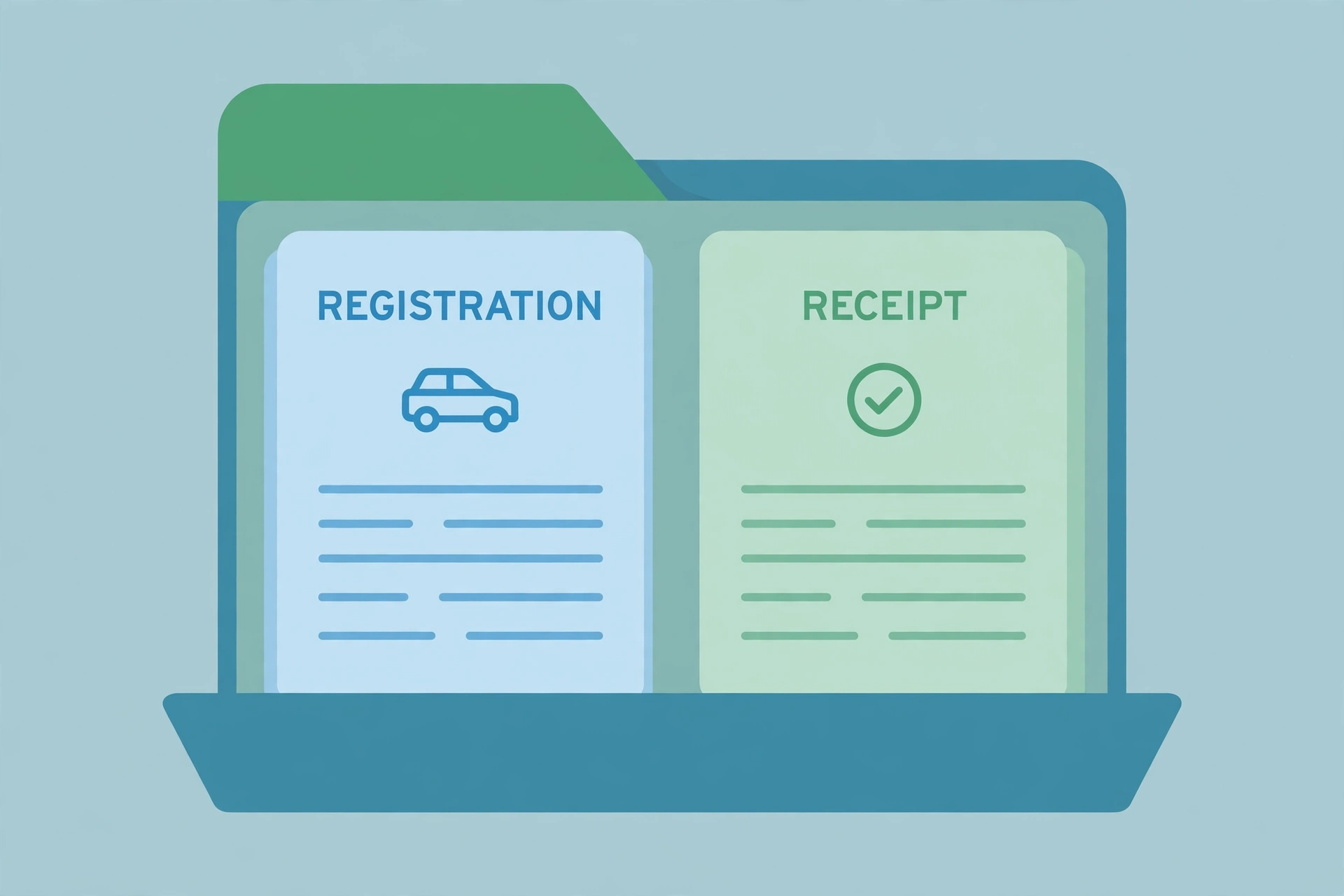
LTO duplicate OR CR applications are filed when a vehicle owner loses, damages, or has stolen one of the two documents that prove a vehicle is registered: the Certificate of Registration (CR) or the Official Receipt (OR). Without these documents, you cannot prove at a checkpoint that your vehicle is registered, and you cannot complete transactions that require them, such as renewal or a change of ownership. The process is straightforward, but it must be done at the right office, with the right affidavit, and with the vehicle presented for inspection.
This guide explains what the OR and CR are, what to do first when one goes missing, what the affidavit of loss must contain, the full requirements checklist, the step-by-step process at the originating LTO office, and how the process differs for damaged, lost, and stolen documents. It also covers what happens when the registration itself has expired, what changes for company-owned vehicles, and how to keep your replacement documents safe afterwards.
What the OR and CR Are — and Why Both Matter
Every registered motor vehicle in the Philippines has two companion documents:
- Certificate of Registration (CR). This identifies the vehicle and its registered owner. It records the plate number, chassis number, engine number, make, model, year, and color, along with the owner’s name and address. Think of it as the vehicle’s identity document.
- Official Receipt (OR). This is the receipt issued when the registration fee is paid. It proves that the current registration period has been paid for — the proof of payment that goes with the CR.
The two documents work as a pair. The CR tells an enforcer or a buyer who the vehicle is and who owns it; the OR shows that the registration is current. When you renew your registration, you receive a new OR for the new period, while the CR generally stays the same unless ownership or vehicle details change. For the renewal process itself, see our guide to car registration renewal.
You can apply for a duplicate of either document, or both if both are missing. A duplicate is a reissued copy bearing the same vehicle and owner information as the original. It is not a new registration, and it does not change the vehicle’s registration period.
What to Do First When Your OR or CR Goes Missing
Before you go to the LTO, take a few minutes to do the following:
- Stop and check properly. Search your vehicle, your home files, and anywhere the documents may have been kept — glove compartment, document envelope, folder with your insurance papers. Many “lost” documents turn up in a second look.
- Check whether only one document is missing. If you still have the CR but lost the OR, or vice versa, the surviving document makes the application easier, because it already carries the plate, chassis, and engine numbers the evaluator will need.
- Do not drive without them if you can avoid it. Driving a vehicle without its OR and CR on board can lead to a citation at a checkpoint, because you cannot show proof of registration on the spot. No specific fine figure is stated here, since figures cited online vary and could not be confirmed against an official source — treat the risk of a citation as the reason to get the duplicate promptly, not as a reason to panic.
- If the documents were stolen, report it. A police blotter or report for the theft strengthens your affidavit and creates a record in case the documents are misused. For a simple loss at home, a police report is generally not required, but the affidavit of loss still is.
- Gather your vehicle details. You will need the plate number, chassis number, and engine number. If you have a photo or photocopy of the old OR or CR, bring it — it is not a substitute for the affidavit, but it helps the evaluator locate your record quickly.
The Affidavit of Loss: What It Must State
The central document in an LTO duplicate OR CR application is the notarized Affidavit of Loss: a sworn statement, signed before a notary public, explaining what happened to the original document. The LTO will not process a duplicate for a lost document without it.
A proper affidavit of loss should state:
- The owner’s identity. Your full name, as it appears on the registration, and your address.
- The vehicle details. The plate number, chassis number, and engine number, plus the make and model if known. These details tie the affidavit to one specific vehicle.
- Which document is missing. State clearly whether the OR, the CR, or both are lost, damaged, or stolen.
- The circumstances of the loss. Where and when the document was lost, damaged, or stolen, in plain terms — for example, that the envelope containing the documents was lost during a move, or that the bag containing them was stolen. The statement should be truthful and specific enough to be credible, but it does not need to be a long narrative.
- A request for a duplicate, and the sworn closing. A line asking the LTO to issue a duplicate, signed by you before the notary, with the notary’s seal and signature.
Have the affidavit prepared and notarized before your LTO visit. Notary fees vary by notary public, so confirm the fee with the notary you choose; it is separate from the LTO’s own charges.
Encumbered or financed vehicles: a special rule
If your vehicle is still financed — encumbered, with a bank or financing institution holding an interest in it — the affidavit of loss is generally executed by the financing institution, not by you alone. Contact your bank or financing company first, before going to the LTO, so you arrive with the correct affidavit. Confirm at your branch whether the institution’s representative must appear or whether its notarized affidavit alone is enough.
Requirements Checklist for an LTO duplicate OR CR
Bring the originals and photocopies of everything on this list. Requirements can vary slightly by district office, so confirm at your branch if you are unsure about any item.
| Requirement | Notes |
|---|---|
| Notarized Affidavit of Loss | Must state owner, vehicle details, and circumstances; for financed vehicles, executed by the financing institution |
| Valid government-issued ID of the registered owner | The name must match the registration record |
| Photocopy of the lost OR or CR, if available | Helps the evaluator locate the record; not a substitute for the affidavit |
| Latest OR and CR, if only one document is missing | The surviving document supports the application |
| Motor Vehicle Inspection Report (MVIR) | Issued after the vehicle passes inspection at the LTO office |
| Police report or blotter, if the document was stolen | Creates a record of the theft and protects you if the documents are misused |
| Authorization letter and representative’s ID, if someone else files for you | Confirm at your branch whether the owner must appear in person |
| For company-owned vehicles: Secretary’s Certificate and company representative’s ID | See the company-owned section below |
LTO duplicate OR CR: Step by Step at the Originating Office
An important rule: a duplicate OR or CR is generally issued by the LTO office where the vehicle was originally registered — the originating district office. That office holds the vehicle’s registration record. Going to a different office may mean being referred back to the originating office, so confirm the originating office from any surviving document before you travel. Our LTO branch directory can help you locate offices and their details.
Here is the typical flow:
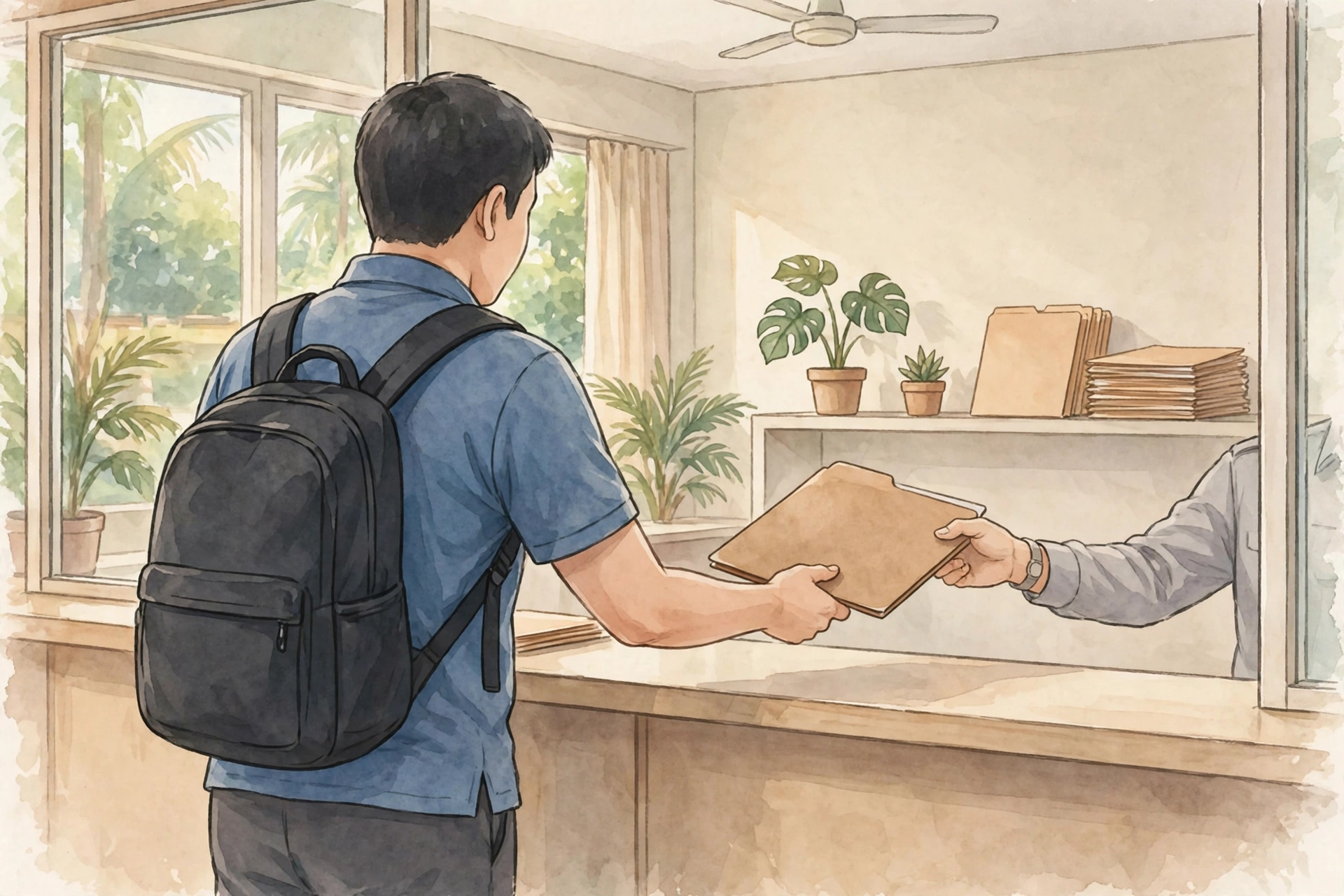
- Go to the originating LTO district office. Bring the vehicle, your affidavit, your ID, and any surviving documents. Arrive early, since evaluation and inspection queues can be long.
- Submit your documents for evaluation. At the evaluator’s window, present your affidavit of loss, ID, and any supporting documents. The evaluator checks your record, confirms the vehicle and owner details, and verifies that the vehicle has no outstanding alarm or unsettled issue that would block the transaction. If anything is missing, you will be told what to complete before proceeding.
- Present the vehicle for inspection. The vehicle is inspected and a Motor Vehicle Inspection Report (MVIR) is prepared. The inspection confirms the chassis and engine numbers against the record — this is why the vehicle itself must be present.
- Pay the assessed fees at the cashier. After evaluation and inspection, the cashier computes the amount due and you pay it. Keep the official receipt.
- Wait for release of the duplicate. The duplicate OR, CR, or both are printed and released to you. Check every detail on the spot — plate number, chassis number, engine number, and your name — before you leave the office. Correcting an error is far easier while you are still at the counter.
- Keep the new documents with the vehicle. File the duplicate with your other vehicle papers, and make a photocopy or clear photo for your own backup file at home.
Processing time depends on the office’s queue and whether your record is complete and clear. Many applicants finish in a single visit if they arrive with a complete affidavit and the vehicle ready for inspection. If the record needs verification with another office, or if a document is missing, the process can take longer. There is no confirmed fixed turnaround figure to promise here, so plan for a full morning and treat a same-day release as the normal case, not a guarantee.
What the Duplicate Costs
Fees are the part of this process where online sources disagree, so this guide is deliberately careful. The LTO fee schedule base most often cited by guides is ₱30 per duplicate document — ₱30 for a duplicate CR and ₱30 for a duplicate OR. That base figure is consistent across multiple secondary guides.
However, the total you actually pay at the cashier is not that base figure alone. The assessed total varies with computer charges, legal research charges, and inspection-related charges, and the cashier’s computation at your originating office is final. This guide therefore does not assert any single total as fact. If a website quotes you one fixed total, treat it as an estimate from that source, not as the LTO’s price, and confirm the assessed amount at your branch before you pay.
Damaged vs Lost vs Stolen: How the Process Differs
The three situations follow the same general flow, but the supporting documents differ:
| Situation | What changes |
|---|---|
| Lost | Notarized Affidavit of Loss is the core document. State where and when the document was lost. |
| Damaged | Bring the damaged original with you. The affidavit still explains the damage, and the damaged document is surrendered. If it is partly readable, it helps the evaluator confirm the record. |
| Stolen | Notarized Affidavit of Loss plus a police report or blotter for the theft. The police record protects you if the stolen documents are misused. |
In all three cases, the vehicle must still be presented for inspection, and the application still goes to the originating office. A damaged document that is still readable does not let you skip the process — once a document is damaged, a clean duplicate is the correct replacement.
What If the Registration Has Also Expired?
A duplicate application and a registration renewal are two different transactions, and an expired registration does not prevent you from getting a duplicate — but you should expect the office to address both. You may be asked to renew the registration as well, or to settle the duplicate first and then renew. Either way, the duplicate alone does not make an expired registration current: it replaces the missing document, and a separate renewal is what extends the registration period.
If your registration is already due or overdue, read our guide to car registration renewal first so you arrive with the renewal requirements in mind too — the renewal link in the “What the OR and CR Are” section above points to it — and ask the evaluator at the counter which order the office prefers: duplicate first, renewal first, or both together. Do not assume the duplicate resets any penalty for late renewal; confirm at your branch how the two transactions are sequenced.
Company-Owned Vehicles
When the registered owner is a company rather than an individual, the application is filed by the company’s authorized representative, and the requirements expand:
- Secretary’s Certificate. A board resolution or Secretary’s Certificate authorizing the representative to transact with the LTO on the company’s behalf, and specifically to apply for the duplicate.
- Representative’s valid ID. The person appearing must present a government-issued ID matching the authorization.
- Company documents as required by the office. Some offices ask for additional company papers; confirm at your branch before the visit so the representative does not arrive short.
- Affidavit of loss. The affidavit still states the vehicle details and circumstances, executed by the authorized representative on the company’s behalf, and notarized.
The inspection and originating-office rules are the same as for individually owned vehicles.
Keeping Your Replacement Documents Safe Afterwards
Once you have the duplicate, a little care prevents a repeat visit:
- Keep the originals in the vehicle, in a protective envelope. The OR and CR must travel with the vehicle, but a simple plastic envelope protects them from rain, sun, and wear.
- Keep a photocopy or clear photo at home. A backup copy makes any future affidavit faster to prepare, because the plate, chassis, and engine numbers are already at hand.
- Store a digital copy in a safe place. A scanned copy in your own files means you can retrieve the details even if the paper copies are lost again.
- Never hand the originals to anyone except when required. Lending the originals for a transaction you are not part of is how documents go missing.
- Check them after every transaction. After a renewal or a transfer, confirm the new OR or CR is in the envelope before you leave the office. For transfers, see our guide to change of vehicle ownership.
If you use the LTO’s online services for other transactions, the official LTMS portal is the place to start. You can also track related vehicle matters through our vehicle tracker guide — useful if you want to check a vehicle’s record while you prepare your affidavit.
Frequently Asked Questions
What is the difference between the OR and the CR?
The CR (Certificate of Registration) identifies the vehicle and its registered owner, including plate, chassis, and engine numbers. The OR (Official Receipt) proves the current registration period has been paid for. They work as a pair: the CR is the vehicle’s identity document, and the OR is the proof of payment that goes with it.
Where do I apply for an LTO duplicate OR CR?
At the LTO district office where the vehicle was originally registered — the originating office. That office holds the vehicle’s registration record. Confirm the originating office from any surviving document before you travel, since another office may refer you back to it.
Do I need an Affidavit of Loss for a duplicate OR or CR?
Yes, for a lost document the notarized Affidavit of Loss is the central requirement. It must state the owner’s identity, the vehicle details (plate, chassis, and engine numbers), which document is missing, and the circumstances of the loss. For a financed or encumbered vehicle, the affidavit is generally executed by the financing institution.
How much does an LTO duplicate OR CR cost?
The fee schedule base most often cited is ₱30 per duplicate document — ₱30 for a duplicate CR and ₱30 for a duplicate OR. The total assessed at the cashier varies with computer, legal research, and inspection charges, and the cashier’s computation is final. This guide does not assert any single total as fact; confirm the assessed amount at your branch.
Can I drive while my OR or CR is missing?
You should avoid it if you can. Driving without the OR and CR on board can lead to a citation at a checkpoint because you cannot show proof of registration on the spot. No specific fine figure is stated here because cited figures vary and could not be confirmed against an official source. Get the duplicate promptly instead.
What if my vehicle is financed and I lose the OR or CR?
Contact your bank or financing institution first. For an encumbered vehicle, the affidavit of loss is generally executed by the financing institution, so you need its affidavit before the LTO can process your duplicate. Confirm at your branch whether the institution’s representative must also appear.
What if my registration has expired as well as my documents being lost?
The duplicate and the renewal are separate transactions. The duplicate replaces the missing document; it does not by itself extend an expired registration. Ask the evaluator at your originating office which order to handle them in, and bring the renewal requirements with you so both can be addressed.
What should I do if my OR or CR was stolen rather than lost?
File a police report or blotter for the theft, then prepare the notarized Affidavit of Loss stating the circumstances. Bring both to the originating LTO office, along with the vehicle for inspection. The police record also protects you if the stolen documents are misused.
Following the checklist, affidavit, and steps above will help you complete your LTO duplicate OR CR application at your originating office.