LTO Additional Restriction Code: How to Add a New Code to Your License
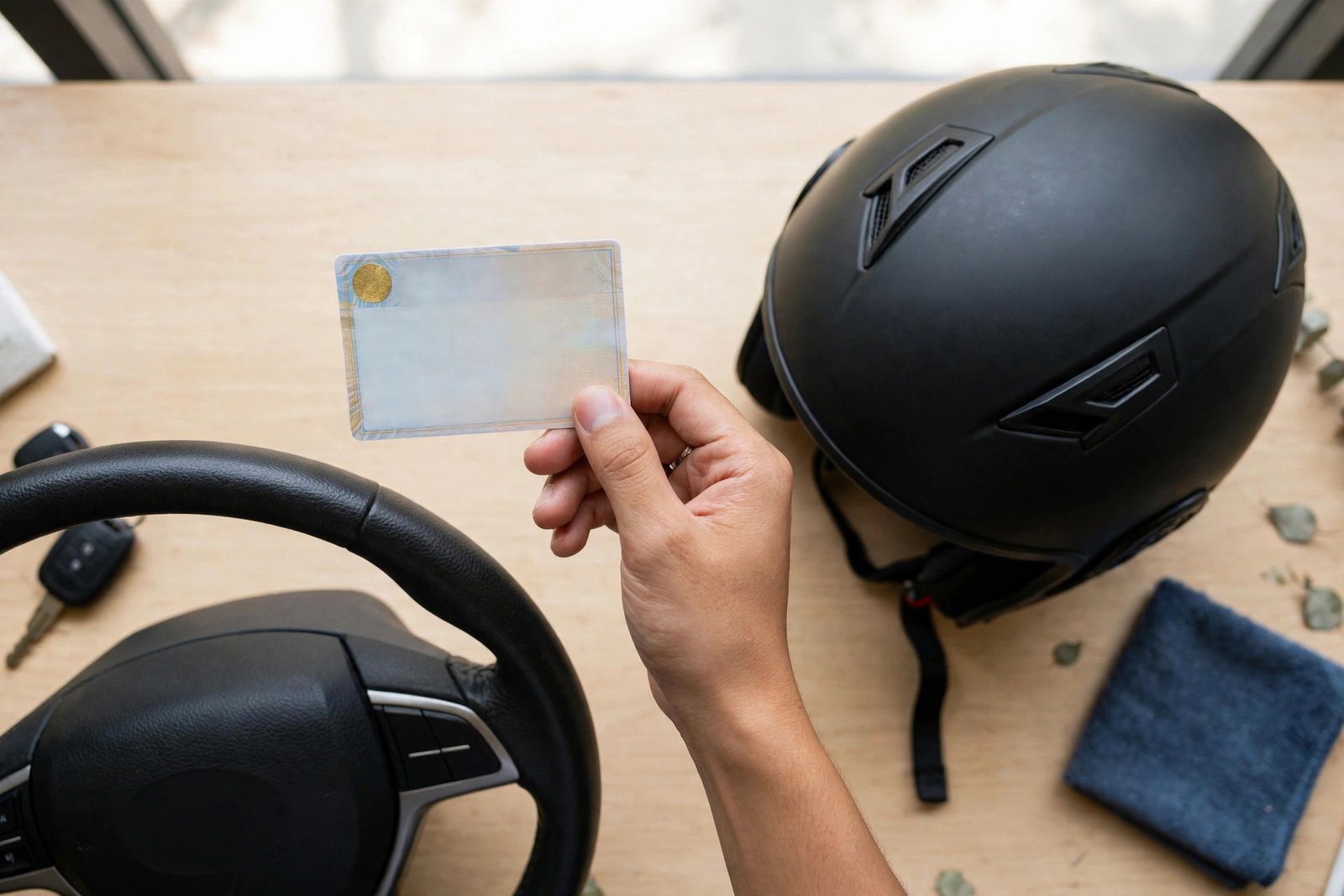
LTO additional restriction code applications are for drivers who already hold a Philippine driver’s license and want to legally drive a different kind of vehicle. If you have a license for a car but want to ride a motorcycle, or you have a motorcycle license but want to drive a car, you cannot simply switch vehicles. Your license only covers the codes printed on it. To drive anything outside those codes, you must add the new code first, pass the required test for that vehicle type, and have a new card issued showing the added code.
This guide covers the transaction itself: who can apply, the documents and training you need, the LTMS or branch process, the fees to expect, and what changes on your new card. It does not repeat the full explanation of every code — for that, read our guide to what each LTO restriction code means.
Why You Need a New Code First
Your driver’s license is not a general permission to drive everything on the road. Each code corresponds to a vehicle category, such as motorcycles, passenger cars, or heavier vehicles. Driving a vehicle not covered by any code on your license is treated as driving without a valid license for that vehicle, and it can lead to a fine and other penalties. Add the code before you start driving the new vehicle, not after you are stopped.
Adding a code is different from renewing your license or replacing a lost card. If you are also due for renewal, ask the branch how to combine the transactions, because the assessed fees and steps can differ.
The Codes in Brief
The LTO now uses letter codes instead of the old numbered codes. In short: A covers motorcycles, A1 covers tricycles and motorcycles with a sidecar, B covers passenger cars and similar light vehicles up to 5,000 kilograms gross vehicle weight as commonly listed in LTO code guides (some guides still cite the older 4,500 kg figure — confirm the limit for your exact code at your branch if your vehicle sits near the boundary), B1 and B2 cover related light-vehicle categories, and C, D, BE, and CE cover heavier vehicles, buses, and vehicles with trailers.
The heavier codes can only be held on a professional license, and older number-only cards remain valid until they expire. Check the explainer linked above before enrolling in any course, because taking the wrong Practical Driving Course (PDC) wastes time and money. An LTO additional restriction code expands what you may legaly drive.
Who Can Apply
You can apply for an additional code if you already hold a valid non-professional or professional driver’s license. You do not start again as a new applicant, and you do not need a student permit for this transaction. You must be physically and mentally fit to drive, and you must be able to read and write in Filipino or English. You should also have no unsettled traffic violations that would block a licensing transaction, so settle any outstanding matter before you book an appointment.
The lighter codes — A, A1, B, B1, and B2 — are open to existing license holders who complete the right training and pass the test for that vehicle. The heavier codes carry extra conditions: secondary guides report holding periods of four years for C (from PDL B2) and D (from PDL B1), three years for BE (from B, B1, or B2), and six months for CE (from C or D), plus the required training. Those periods could not be confirmed on an official LTO page, so confirm at your branch whether you already qualify before paying for a heavy-vehicle course.
On transmission type: a manual code generally covers automatics in the same class, but an automatic-only code does not cover manuals. Moving from automatic-only to manual in the same class requires a practical test in a manual vehicle; confirm at your branch how that change is classified.
Requirements Checklist
Every document must match the code you are adding. A PDC certificate for a motorcycle does not support an application to add a car code, and a car PDC does not support a motorcycle code. Bring originals and photocopies where the branch asks for them, and keep your own copies of everything you submit.
| Requirement | What to prepare |
|---|---|
| Current driver’s license | Original non-professional or professional license; an expired license may change the transaction, so confirm at your branch first |
| Application form | Accomplished Application for Permits and Licenses (APL) form, available from the LTO website or at the branch |
| Practical Driving Course (PDC) certificate | PDC for the new vehicle type, from an LTO-accredited driving school, electronically transmitted to the LTO; bring a hard copy as well |
| Medical certificate | Medical certificate from an LTO-accredited clinic, electronically transmitted; get it close to your appointment and confirm its validity window at the clinic |
| Training certificate for heavier or special codes | TESDA NC III or equivalent accredited training, where required; confirm at your branch |
| Clearance, where required | NBI or PNP clearance for professional license holders, where required; older guides list this, so confirm at your branch whether it applies |
| LTMS account | Active LTMS account for the online route; see our LTMS portal guide if you still need to set one up |
The Practical Driving Course (PDC) for the New Code
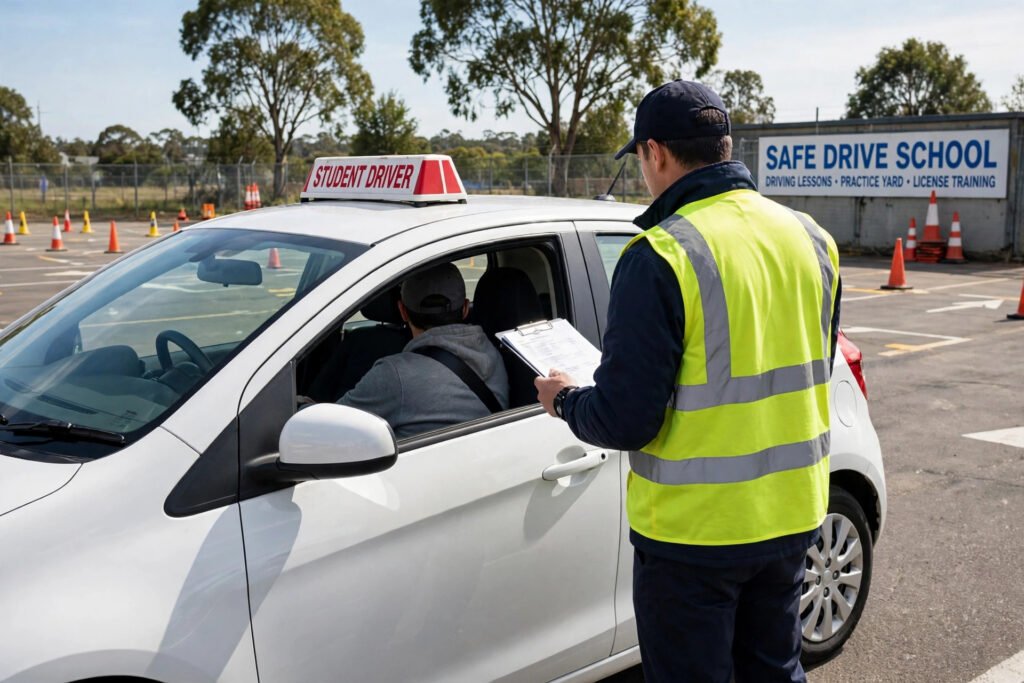
Take the PDC for the specific vehicle type you are adding, at an LTO-accredited driving school: a motorcycle PDC for A or A1, a light-vehicle PDC for B, B1, or B2, and accredited TESDA or driving-school training for the heavier codes. Your school transmits the certificate electronically to the LTO — check that it names the correct vehicle category before you leave.
You do not need to repeat the Theoretical Driving Course (TDC), which is for first-time applicants. You do need the practical course for the new vehicle, plus the practical test at the LTO. While learning a vehicle type beyond your current code, practise only under an LTO-accredited driving instructor, and never drive that vehicle alone on public roads before the new code is on your card. PDC prices vary by school and are separate from LTO fees, so ask for the full price before you enrol.
Medical Exam for an Additional Code
You need a medical certificate from an LTO-accredited clinic or physician, transmitted electronically to the LTO. This is the same kind of medical examination used for other license transactions: a basic fitness check covering vision and general fitness to drive. Our LTO medical exam guide explains what to bring and what the examination usually involves.
Do not reuse an old medical certificate and assume it is still valid. Get a fresh examination, or confirm with the clinic and the branch that a recent certificate is still acceptable. If the clinic finds a condition that affects driving, the LTO may add a condition code, such as a corrective-lenses requirement, which will also appear on your new card.
Written Exam and Practical Driving Exam
The practical driving test for the new vehicle type is the central exam for an additional code: you must demonstrate that you can handle that vehicle safely, and the test is taken in the vehicle type matching the code you are adding. If you do not own a suitable vehicle, you may need to rent one for the test, so ask the branch or the testing area about rental arrangements before your appointment.
Whether a written or theoretical exam is also required depends on the code and on how the branch assesses your transaction. Some guides state that no new written exam is required, others state that a theoretical exam applies if required for that code, and older guides describe a full written test. Because the sources disagree, this article does not promise that you will skip the written exam: expect the practical test, prepare for a possible theoretical exam, and confirm the exact requirement when you file. If you fail, do not expect a same-day retake; confirm the waiting period at your branch.
LTO additional restriction code: step-by-step application
Step 1: Confirm the code and check your eligibility
Decide exactly which code you need for the vehicle you plan to drive, and check the eligibility notes above. If you want a heavier code, confirm the holding period and training requirement at your branch before you spend money on a course.
Step 2: Complete the PDC for the new vehicle type
Enrol at an LTO-accredited driving school, complete the PDC for the new code, and keep the certificate. Check that the certificate shows the correct vehicle category and that it has been transmitted electronically.
Step 3: Get your medical certificate
Visit an LTO-accredited clinic, complete the medical examination, and confirm that the certificate has been transmitted to the LTO. Bring a printed copy to your appointment along with your other documents.
Step 4: Apply through LTMS or walk in at a branch
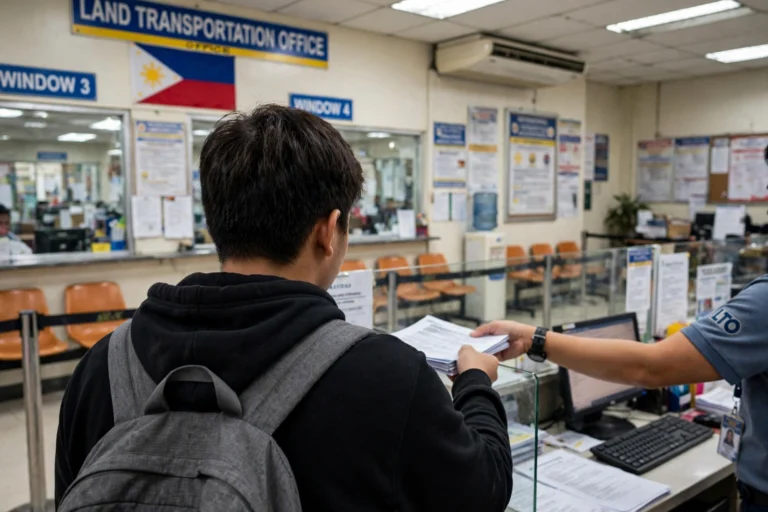
For the online route, log in to the official LTMS portal, then choose Licensing, Driver’s License, and Additional Code or Category. Upload your medical certificate, APL form, and training certificates, and schedule an appointment at your preferred LTO office. For the walk-in route, visit a licensing centre with your documents and submit your application to the customer service officer. Either route ends at the branch for biometrics, exams, and payment.
Step 5: Biometrics, exams, and payment
At the branch, you will go through biometrics capture — photo, fingerprint, and signature — and then take the required exams for the new code. After passing, pay the assessed fees at the cashier and keep the official receipt. The fee you pay is the amount on your official assessment, not a figure quoted in any guide, so check the breakdown on the receipt before you leave the counter.
Step 6: Receive your updated license
Once payment and processing are complete, you will receive your updated license showing the new code alongside your existing codes. Check it before you leave: your details, the full list of codes, any condition codes, and the expiry date. Raise any error at the branch immediately. Your old codes stay on the card — adding a code expands your license, it does not replace what you already hold.
Fees for Adding a Code
LTO fees for this transaction have been reported differently across guides, so treat every figure here as a guide to the structure, not a guaranteed total. The most consistently reported charge is PHP 100 per additional restriction code. Older breakdowns also list a computer fee of PHP 67.63 and, where a replacement card is issued, a replacement fee of PHP 225 — together around PHP 392.63 with a replacement card, or around PHP 167.63 without it — while a more recent secondary page quotes PHP 135 as a base figure. Because these figures conflict, this article states no single total as fact: budget for the per-code fee plus computer and replacement fees, and rely on your LTMS assessment and official receipt.
Separate from government fees, expect to pay for the PDC, the medical examination, and possibly a vehicle rental for the practical test. Secondary guides quote PDC prices roughly around PHP 2,500 for motorcycles, PHP 4,000 for light vehicles, and PHP 8,000 for heavy vehicles, with a medical examination around PHP 450 and test-vehicle rental roughly PHP 150 for a motorcycle and PHP 250 for a sedan. Those are provider prices, not LTO fees, so get written quotes first. If your license is also expired or due for renewal, renewal fees and penalties may be added — ask for a combined assessment.
What Changes on Your New Card
The most visible change is the codes field: your new code appears alongside the codes you already held. Nothing is removed unless a separate transaction changes it. Your license number generally stays the same, and your existing codes remain valid. Any condition codes, such as a corrective-lenses requirement, also carry over or are updated based on your new medical certificate, so read the whole card, not just the new letter.
The expiry date is another detail to check. Adding a code is not automatically a renewal, so do not assume your validity period restarts from the date of the new card. Until the new card is in your hands, you are still limited to your previous codes — passing the practical test alone does not authorise you to drive the new vehicle type on the way home.
Common mistakes to avoid: driving the new vehicle before the code is added, enrolling in the wrong PDC, arriving with a certificate that has not been transmitted electronically or names the wrong vehicle category, and arriving with exactly the fee quoted in an old guide. Bring a little extra, or a payment method your branch accepts.
Also note that changing from non-professional to professional is a different transaction, even when done alongside adding a code; our non-professional license requirements guide is a useful starting point if you are planning that bigger upgrade. Finally, do not trust a fixer or an unofficial shortcut: the process goes through LTMS and the LTO branch, and any offer to add a code without training or testing should be treated as a warning sign.
Frequently Asked Questions
Can I add a code to my license without taking a course?
No. You need the Practical Driving Course for the new vehicle type from an LTO-accredited driving school, plus the practical driving test at the LTO for that vehicle. You do not need to repeat the Theoretical Driving Course for first-time applicants.
Do I need a written exam to add a code?
It depends on the code and on your branch’s assessment. The practical test is the central exam. Some guides say no new written exam is required, while others say a theoretical exam applies if required for that code — confirm the exact requirement when you file.
How much does it cost to add a restriction code?
Budget for a per-code fee, reported most consistently as PHP 100, plus a computer fee and a replacement fee where a new card is issued — secondary totals range from around PHP 167.63 to around PHP 392.63. Rely on your LTMS assessment and official receipt for the exact total; PDC, medical, and rental costs are separate.
How long does the process take at the branch?
Secondary guides describe roughly three to five hours depending on queues and verification. Allow a full day and do not schedule anything urgent immediately afterwards.
Can I drive the new vehicle after passing the test but before I get the new card?
No. Until the updated card showing the new code is in your hands, you are still limited to your previous codes.
What happens to my old codes when I add a new one?
Your old codes stay on the card. Adding a code expands your license — it does not replace the codes you already hold. Check the full codes field, any condition codes, and the expiry date before leaving the branch.